Latest

Bowen Island to Roberts Creek

The winds the next morning had shifted to a nice southeast tailwind so I rushed to get out and take advantage of it.

It was now low tide, however, and the nice sheltered gravel beach had retreated to a slippery, narrow surge channel.

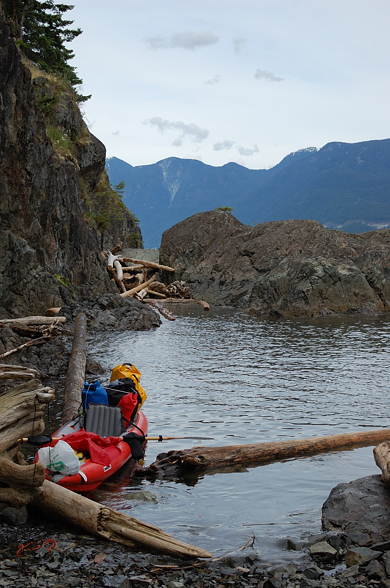
I didn’t want to miss the winds so I put in anyways, and it was difficult. With this boat you can’t drag it in to the water full of stuff. It is a great boat in most respects except for going in and out of the water. You have to pick it up and carry it in unloaded, then anchor it and wade in with your stuff and load it while it’s floating. Every boat has its advantages and disadvantages and I chose this one for its versatility and ability to be easily hiked through the forest, and I am paying for this versatility with the difficulty of putting in and pulling out. But it’s worth it IMO. I managed to get off with quite a bit of difficulty but not too much damage.

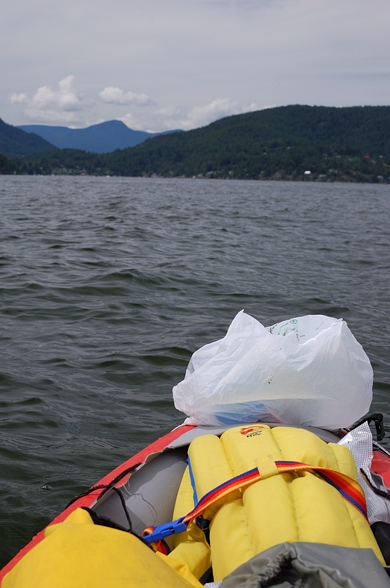
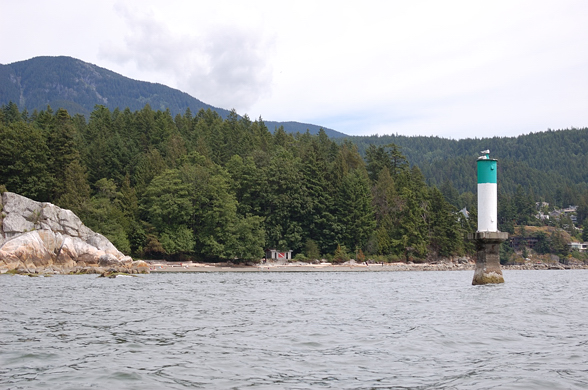
The weather was cloudy with a bit of drizzle. I quickly drifted in the direction of my destination and saw a couple porpoises a few hundred feet off. I weaved my way through the barrier islands at the entrance to Howe Sound and made my way across the open water to the mainland Sunshine Coast. I was not looking forward to this next section since there are very few opportunities for camping. There are houses along an almost unbroken stretch of about 30 km of coastline here.
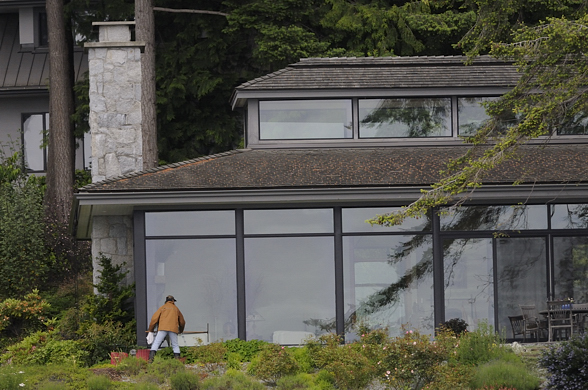
Along with huge windows comes big chores.
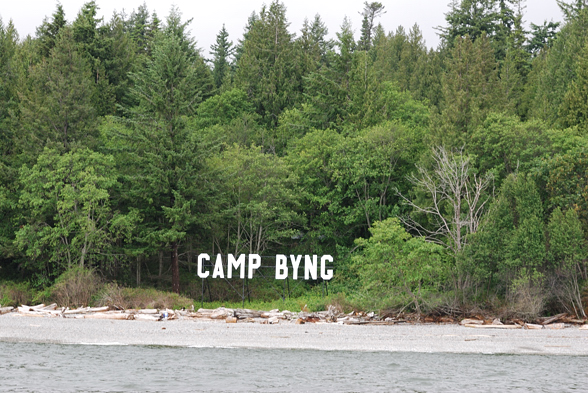
I just wanted some Camp – Ing

My plan was to go to Roberts Creek today, about 20 km, where there is a tiny provincial park on the water. You aren’t supposed to camp there, with camping being a kilometre inland in the forest, but I figure they make the rules for the 99.99% of the people who arrive by land, not sea.

By lunchtime my arms were getting very sore. And so was my butt. Every so often I would break to take photos and stretch and when I do this I take my gloves off and stuff them behind the side of the seat. One time, when I pulled them out to put them back on, I accidentally snagged the inflator plug to the seat and pulled it out. Immediately the seat deflated quite a bit and by the time I put the plug back in it had become much more comfortable. Problem solved!

The tailwind stayed with me all day and diminished to near calm by about 5 p.m. when I reached Roberts Creek. The actual park is a couple kilometres past the jetty in Roberts Creek and I just pushed on with weaker and weaker strokes until I finally got there.
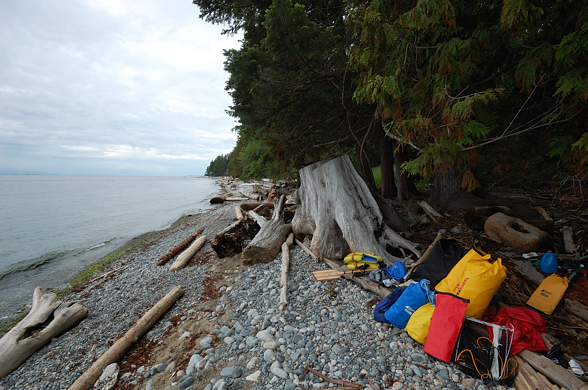
There were moderate waves crashing on the gravelly beach on the high tide which made unloading a bit of a chore, but not too unwieldy.

There were quite a few people going in and out of the water in kayaks and walking around. I can see why, with this being the only accessible waterfront park around, all 300 feet of shoreline of it, except for the pier in the middle of Roberts Creek “village”. I found the most secluded spot I could under the trees, about 100 feet from the neighbours’ house. I waited until it started getting dark and then set up my tent. I was not looking forward to spending a whole day here tomorrow, but I had no choice since my arms were so sore. I needed to take it one day on / one day off for the first while until I got stronger. Finally around 10 pm the last people left.

I woke up early to a falling tide and planned my day.

I was going to do some things to the boat and beyond that, just  sit around and take pictures.

There was a good northwest headwind so it was fortunate that I took today off. It turns out that sometimes being forced to stay put and contemplate things opens up observations you would have otherwise missed.

This beach took on a new character at low tide.
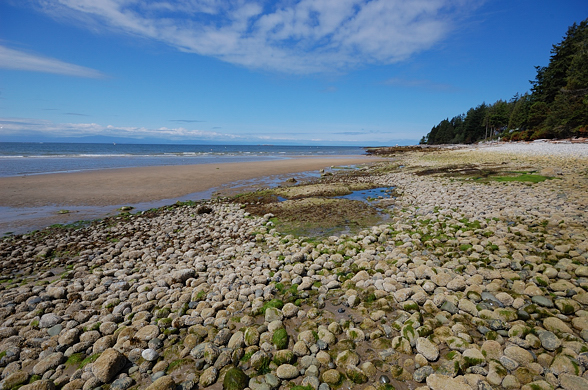
Below the rocky sloped beach was a flat sandy beach

with a few large rock outcrops.

This attracted a whole new set of bird life. An eagle was sitting on one outcrop in the distance.
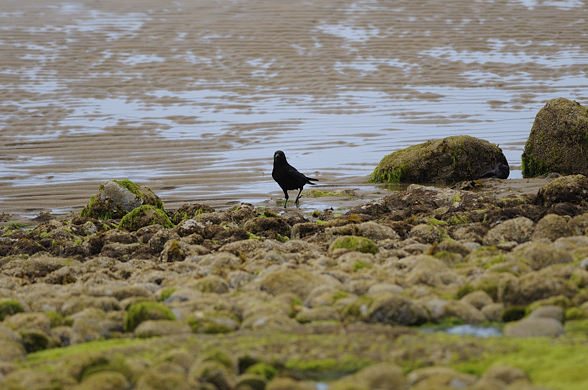
I watched ravens search for whelks.
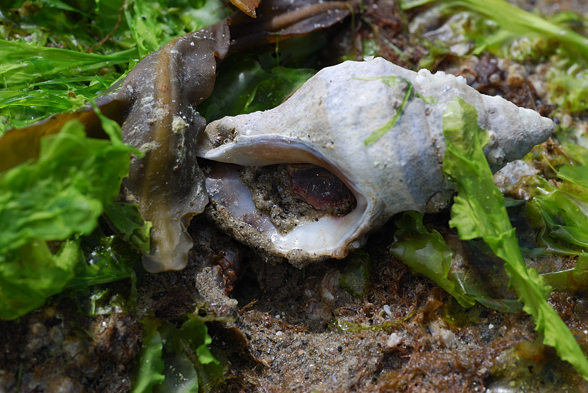
and then fly them up to the rocky part of the beach and drop them.

Somehow they follow where they go because they always seem find and eat them. They must have good eyes.

They did this for quite a while and I imagine they cleaned out most of the whelks from that rocky outcrop. Birds on this coast certainly don’t have a bad life, at least this time of year. These guys get treated to escargot every day. A seagull even tried dropping a shell but it landed on the sand. This served as a reminder that not only do the tides increase the biodiversity due to the increased habitat zones they create, but they also provide a way for nutrients to flow from the sea to the land as non-diving birds and other animals descend for the bounty. I even saw a garter snake way down in the intertidal zone too, probably looking for little shore crabs.
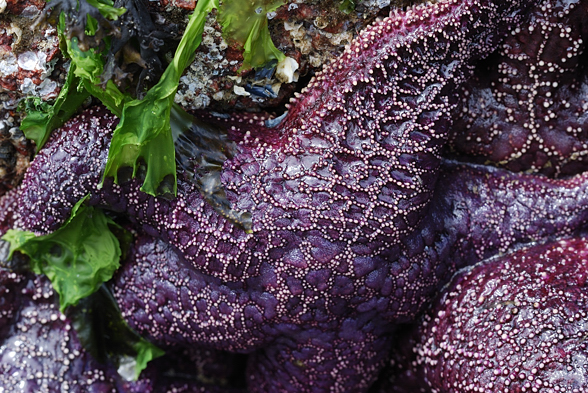
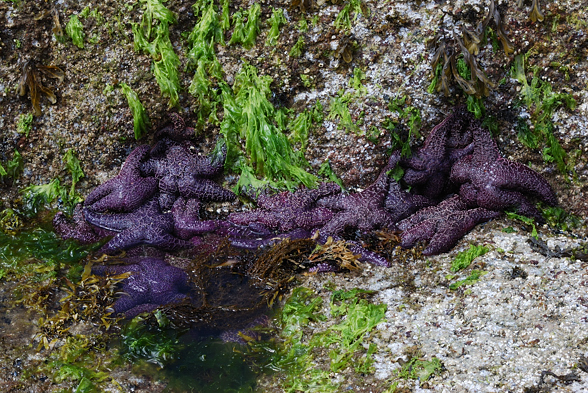
Sargassum weed

Then the tide came up and everyone took off, with only the geese left to pick off sea lettuce (Ulva) from the high tide line.

Such a nice rainbow deserves another shot.

I prepared for another night and around 9 p.m. the teenagers showed up with their loud trucks. I didn’t mind too much and the party raged on until midnight, and a few of them stumbled onto me in my tent. Finally after a few broken beer bottles they left. I will be glad to hit the seas again tomorrow.

Vancouver to Bowen Island

Day 1 began with a ride down to Whytecliffe Park with my friends Mike and Greg & Mitzi. The weather was great. I was mostly ready to go and then I realized that I forgot my microphone (for when using my underwater housing for the video camera). So Mike and I raced back to Greg’s house to get it and returned 45 minutes later.

I didn’t spend too much time getting all my stuff well organized in the boat on the beach since the waves were bouncing it around and there were too many people watching. It all fit in though and this was the first time I had had it in the water with all my stuff in.

I went offshore a ways and took some photos looking back.

Looking up Howe Sound

Then I proceeded to cross the channel to Bowen Island.

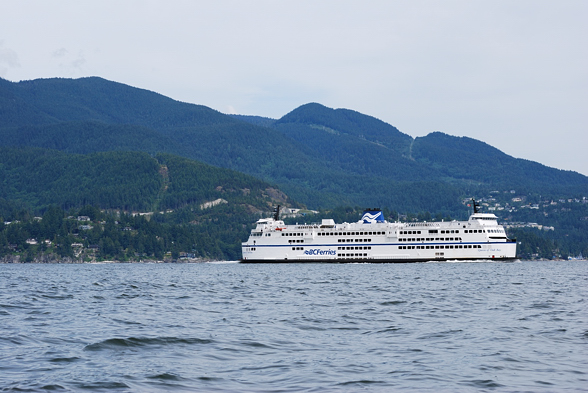
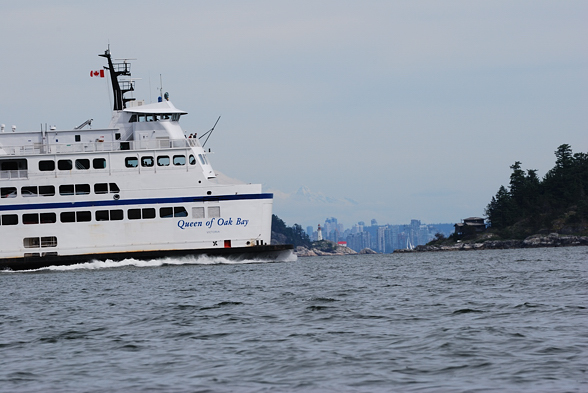
I noticed a ferry coming my way from Nanaimo. I thought I could beat it since it was still a ways off in the distance, but it was moving quickly. Funny, they don’t seem so fast when you’re on them… So I paddled harder and harder. This was all within 10 minutes of getting in the water. I hoped the captain could see me, which I am sure he could. I paddled harder.

Then I noticed that the microphone which we had raced home to get, was now dragging in the water over the side of the boat. Of all the things to end up in the water…. I cursed and dunked it in my drinking water to rinse off the salt.

Finally the ferry made an angle signifying that it was going behind me and I relaxed. I arrived at Bowen Island with sore arms. This was not a good beginning for my trip considering my major concern is tendonitis in my right wrist.

I paddled up the shoreline a few more kilometres into a headwind and saw a nice little sheltered cove where I could pull out and stretch.

For some reason the shore crabs liked this rock.

I could have camped here but it was only 2:30 pm and I had planned to go all the way to the tip of Bowen today. I had only gone about 8 km.

So I set out again with sore arms and rounded the south eastern point of Bowen Island. The wind started to die down now.

I took some video of me paddling, using my underwater housing on the front of the boat. It didn’t turn out too great, and I didn’t want to risk frying the microphone before it dried out so I got no audio.

The same ferry that almost ran me down?

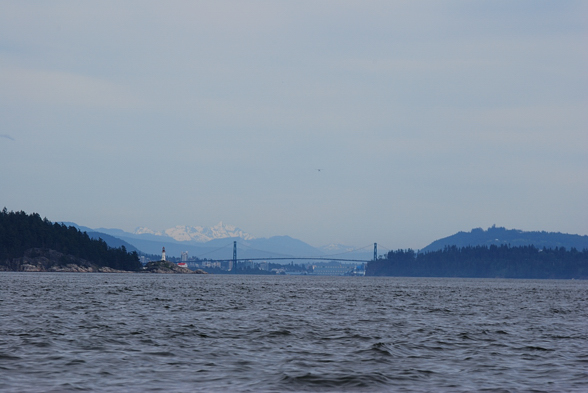
Looking back to Vancouver

I finally reached the western tip of Bowen at the Roger Curtis lighthouse.

Just before the lighthouse I found a nice sheltered cove (on a high tide) with grassy knolls above.

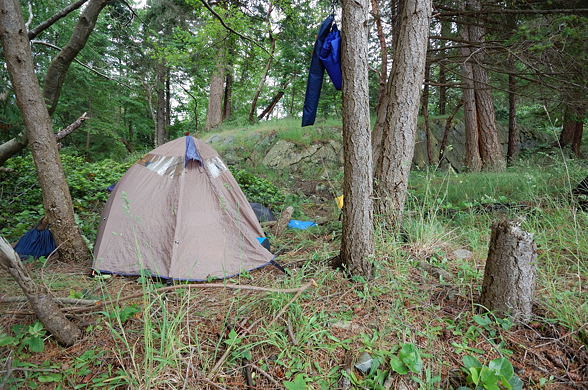
There was dry forest right beside the meadows and I set up my tent there.

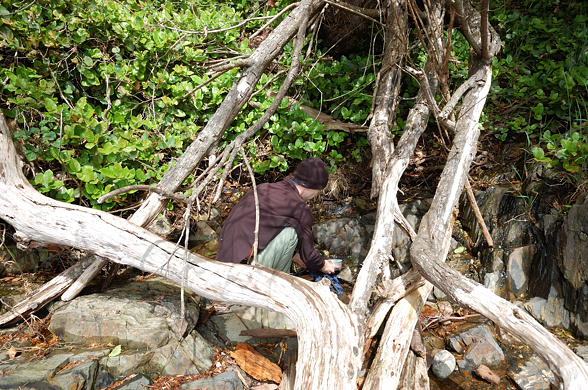
And there was fresh water seepage at the next cove over.

This is an idyllic spot for camping. Its only drawback is there’s a bit of a hike up the rocks to the campsite, and I imagine that in dry spells the water disappears.

Later in the evening I was walking on the beach logs and one gave out and I had to put all my weight on my bad knee to prevent a fall. That was very painful but the pain went away shortly and afterwards it just felt a little tender. This was too bad since my knee was getting much stronger and I had noticed this while hiking my stuff up the hill.

A merganser stopped by the cove to do some fishing and I got some video. The site has a rough bench set up on the grassy meadow, and I tried to sit there and watch the sunset, but the mosquitoes were too bad so I went to bed.

They were predicting rain overnight around midnight, and right around midnight I awoke to raindrops on the tent. It started quickly and came down hard and sustained. I tried to get back to sleep but it wasn’t going to happen. Oh well, I was safe and dry in my tent. Then two hours later I noticed I had wet feet. There was a huge puddle in the tent from the water collecting between the bottom of the tent and the ground sheet underneath. The water seeps in through small holes and gets sucked up into my sleeping bag. So I pulled the ground sheet out and finally got back to sleep. By morning the rain had stopped and the wind picked up, a strong northwester (headwind) which lasted all day. This was a good opportunity to dry things out and take a day off, since my arms were sore and there was a headwind anyways.

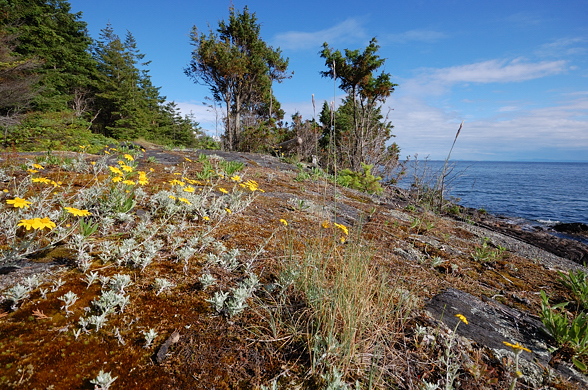
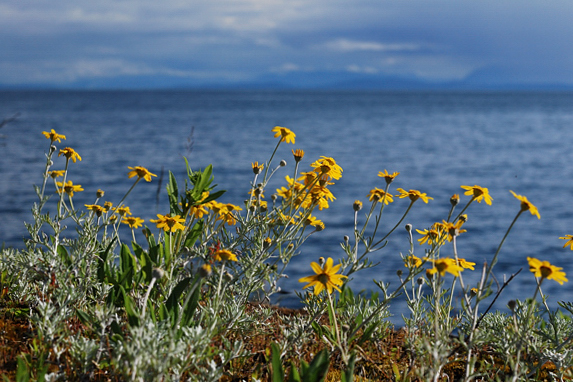
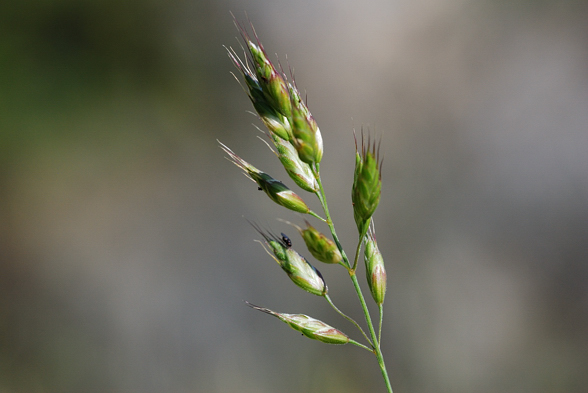
This site is really nice. There is a lot of bird life here, of all sorts. Lots of different types of ducks, geese, eagles, ravens, hummingbirds, and there was even a turkey vulture that was working its way along the shoreline, looking in each cove for something washed up to eat. This spot also has some nice rocky outcrop plant communities and I took photos and made some videos about how it is important to protect what remains of the coastal areas of Georgia Strait because real estate development is putting up houses all along the shore of this body of water. Then it is just a matter of garden invasives and people trampling which diminishes or destroys this unique ecosystem. It is very sensitive because when it dries out the mosses and lichens become brittle and any footprints crumble them. If you go to Lighthouse Park in West Van in the more heavily used areas you can see what happens to rocky bluffs when too many people walk over them. This site on Bowen was nice because there was also an absence of Scotch Broom and other invasives, besides sweet vernal grass. Broom is very invasive in these habitats because it can fix atmospheric nitrogen as a fertilizer and outcompete the natives, and then totally change the dynamic of the ecosystem. Then you lose most of the more sensitive native species.

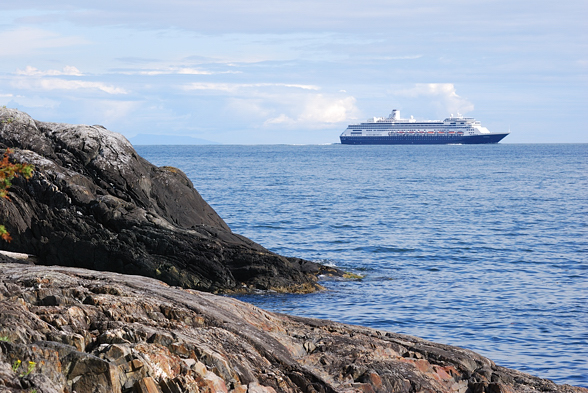
Cruise ship heading to Alaska. I imagined I’d be encountering these frequently.

I was impressed with how nice this spot still was, and how it had somehow remained house-less. I’m not sure what the status of this land is, but I went exploring over the small hill behind my campsite and saw a new road being punched up. Nice! Should we expect a house on this spot next year? Maybe it’s just an access road for a park.