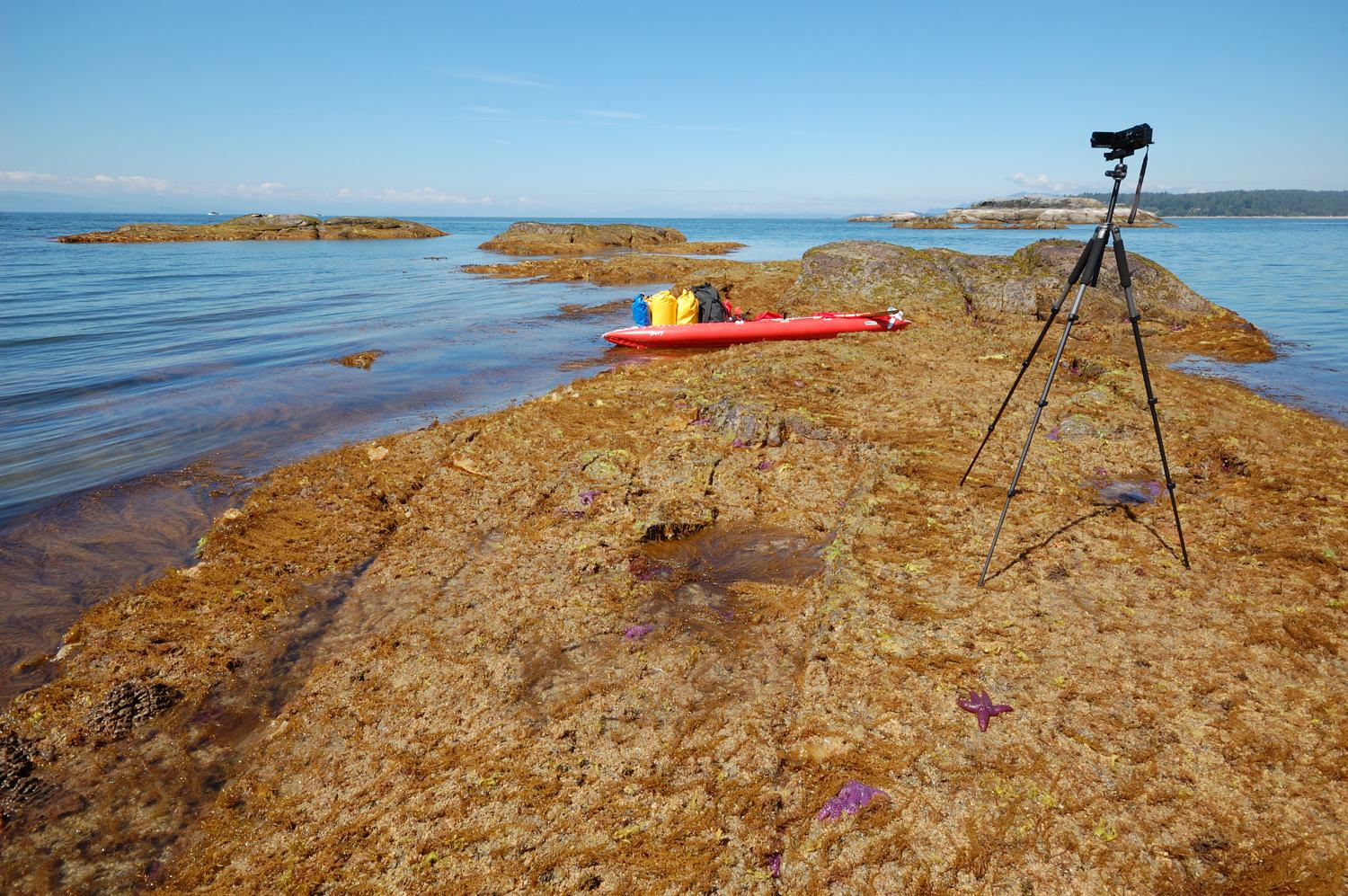
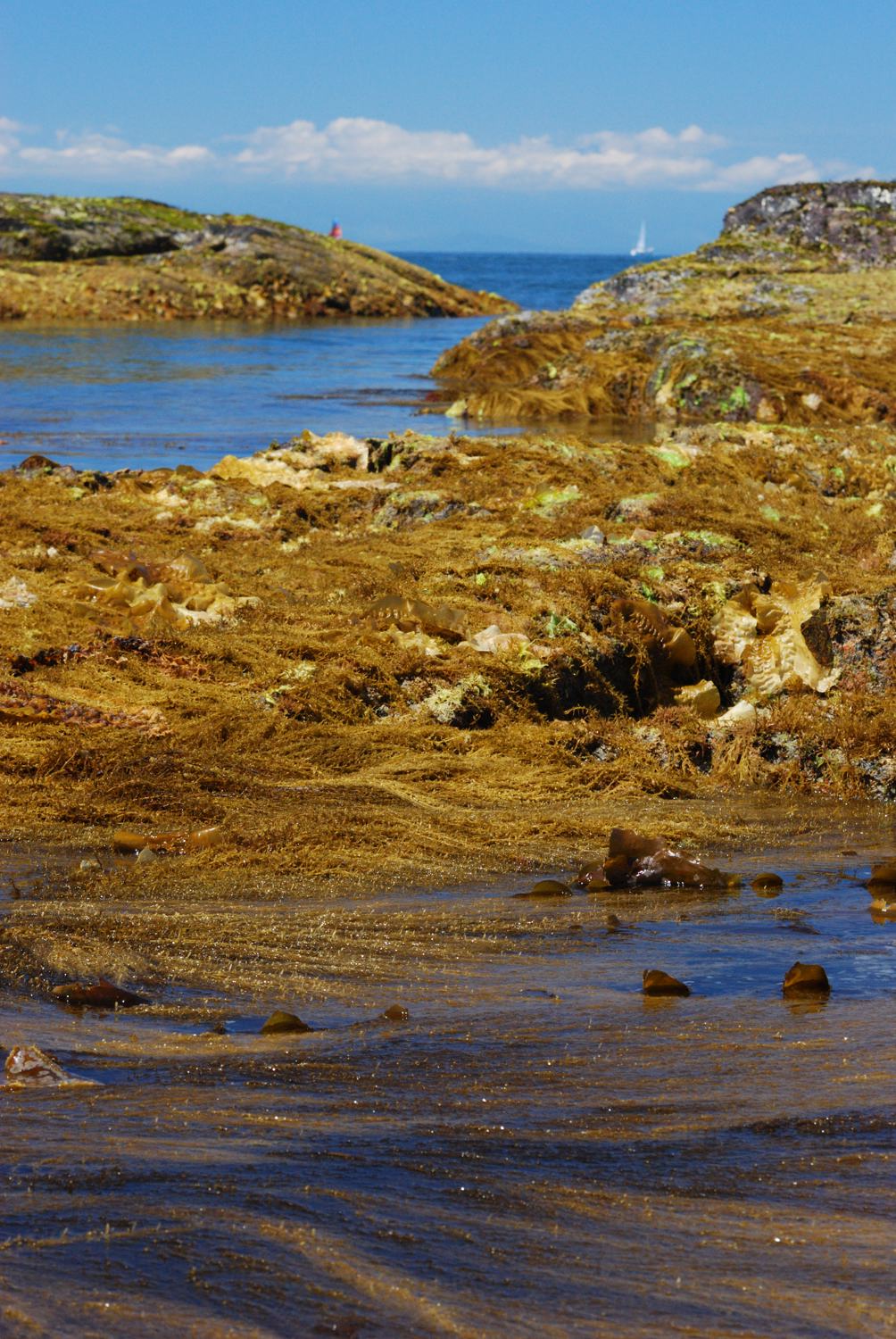
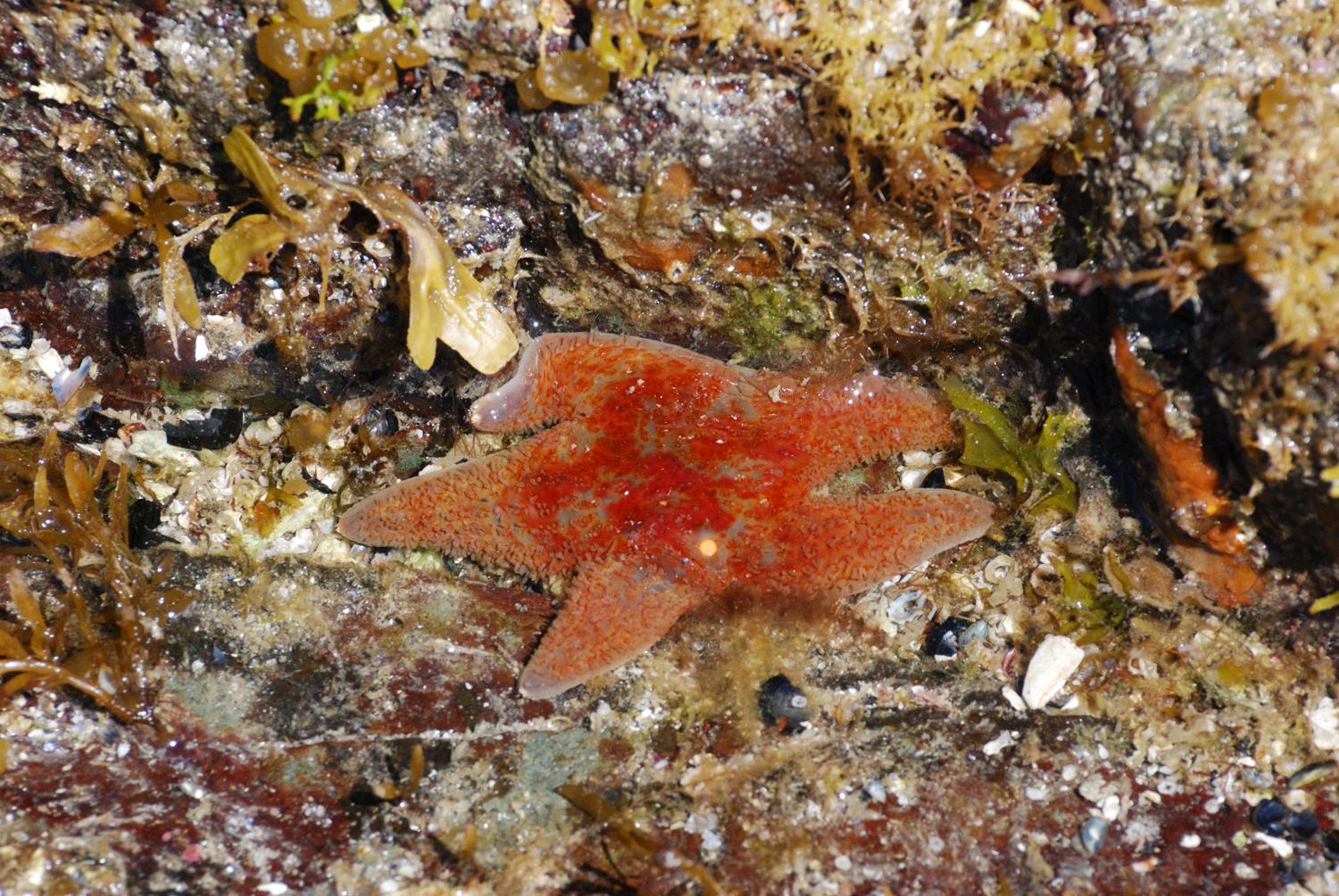
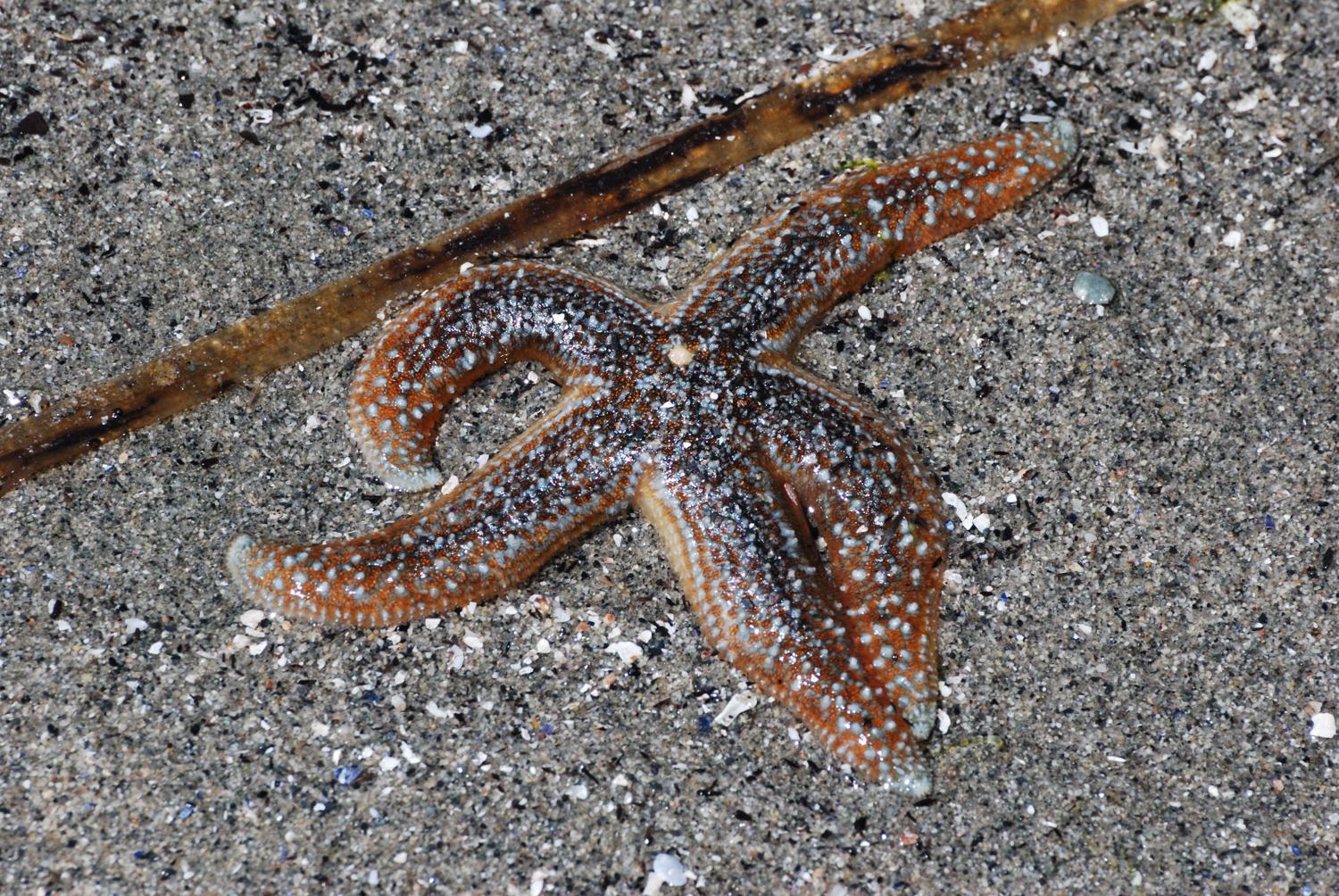
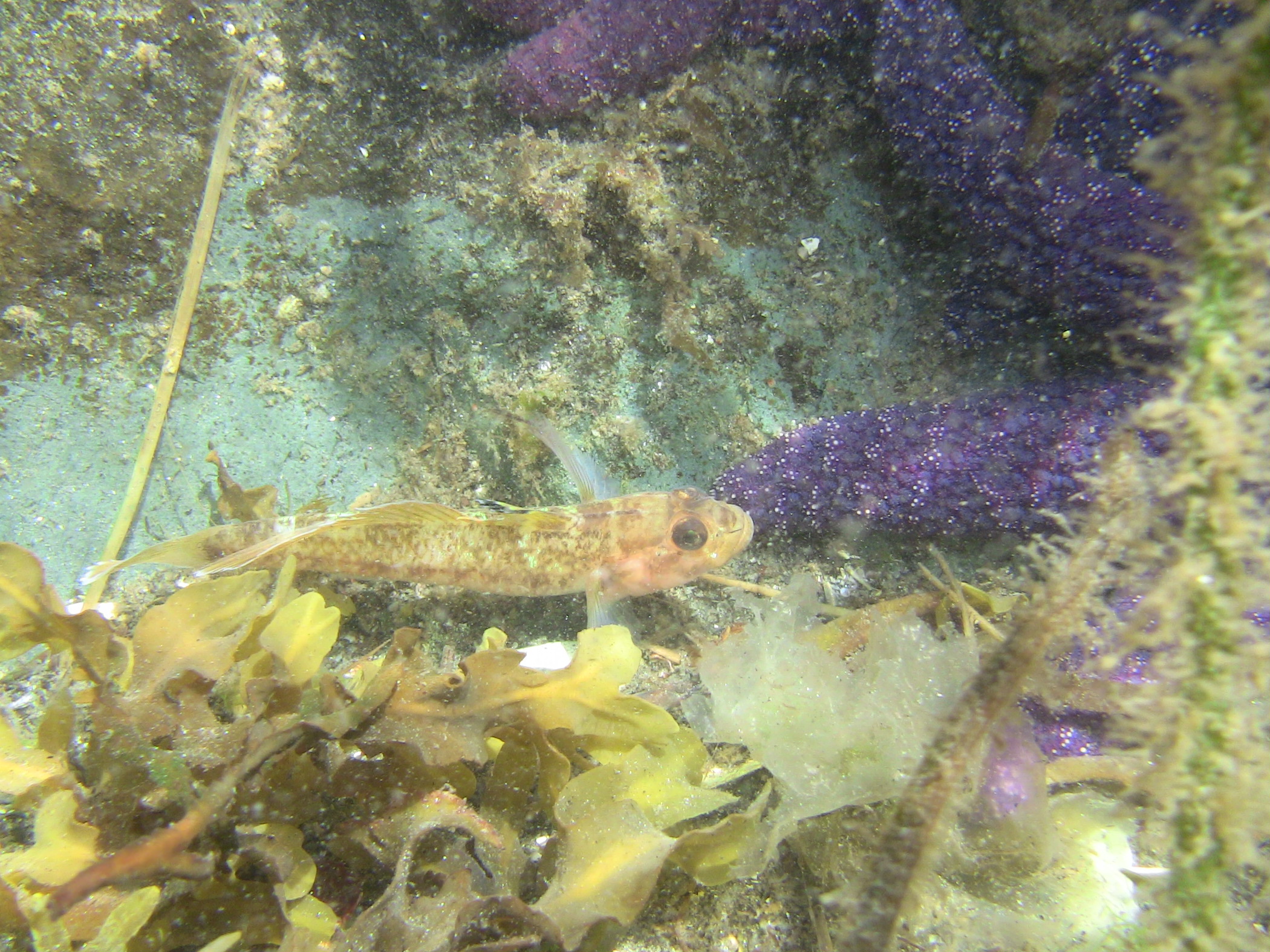
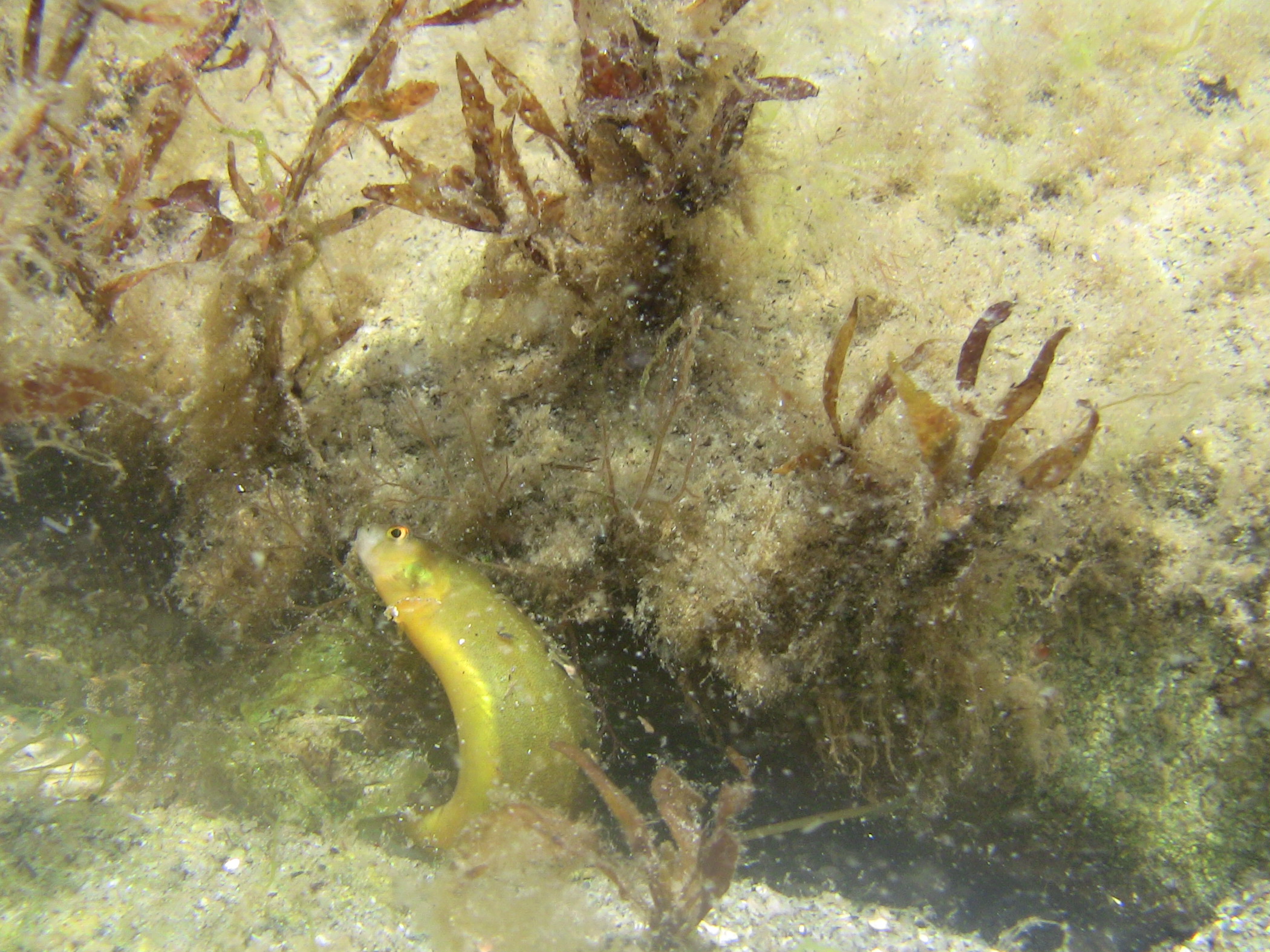
I packed up in the morning ready to go, and around lunchtime went down to the low tide to try to get some more shots with my underwater housing. I still had the tide, sun, and wind in my favour, but this time the water was very cold. It was chilling me way down and my hands were getting sluggish. I guess some deepwater current brought it up with the wind shift. I got a few good shots but I still need more practise. I found a small penpoint gunnel half in the mouth of a Red Irish Lord sculpin, struggling for its life. I didn’t get many good shots because I was aiming too high. Eventually the sculpin ate the whole gunnel.
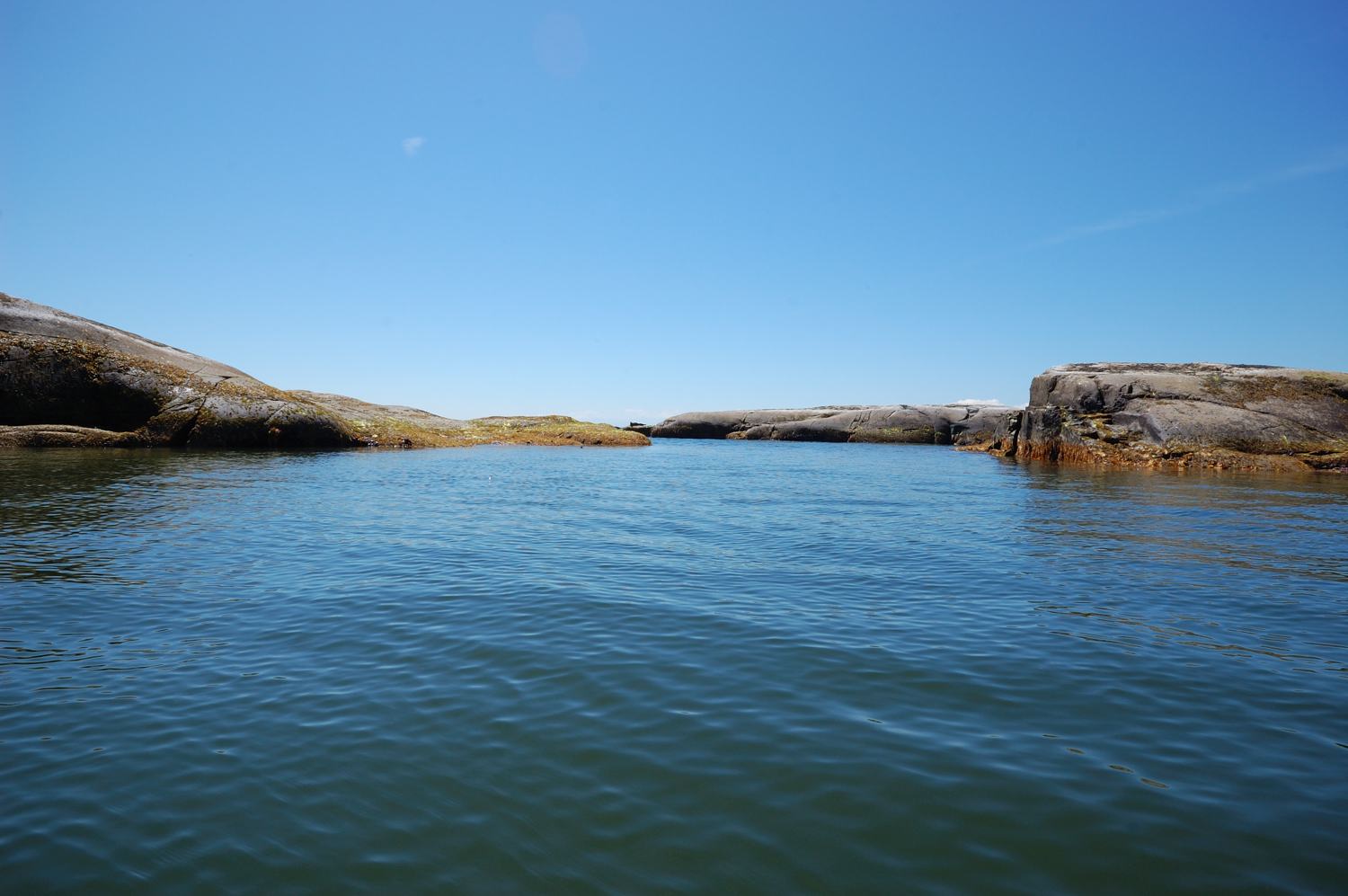
I then left the island and started heading up the coast. I called my grandad in Ontario. The wind pushed me up the coast like usual. I went through the passage between Thormanby Island and the mainland, which is Smuggler Cove Provincial Park.
Once past the last point I allowed myself to drift in the wind and had lunch which consisted of a Clif Bar, walnuts dipped in honey, and dried dates dipped in peanut butter – pure energy!
I could then also see the western part of Thormanby Island which is totally different from the eastern side. It is not parkland and is covered in more verdant forest, having deeper soil. On the north side is steep cliffs leading down to the water, and a big sandy beach. There are also lots of houses. In the middle is Buccaneer Bay with a nice beach, but I didn’t go.

Also now I was passing by the southern tip of Texada Island, a 50 km long mostly undeveloped island off the Sunshine Coast. I headed for Pender Harbour, where I was planning to spend the night and resupply in Garden Bay. I took a straight line for the point and went away from the coastline. I was out in the middle of the water and the wind was getting pretty strong. There were big waves coming in from Georgia Strait behind me. I was able to kind of surf down some of the larger ones for a bit. I got to the entrance of Pender Harbour while the winds died down. I noticed that the tide was also taking me in the direction I wanted to go since I was moving pretty fast. I decided not to go to Garden Bay since I had no reason to. The winds were turning into a slight headwind. I would go to Nelson Island tonight, which is another large undeveloped island in the entrance to Jervis Inlet, the next big inlet into the Coast Mountains up from Howe Sound. Along the way I passed some small islands which seemed to be important habitats for birds.
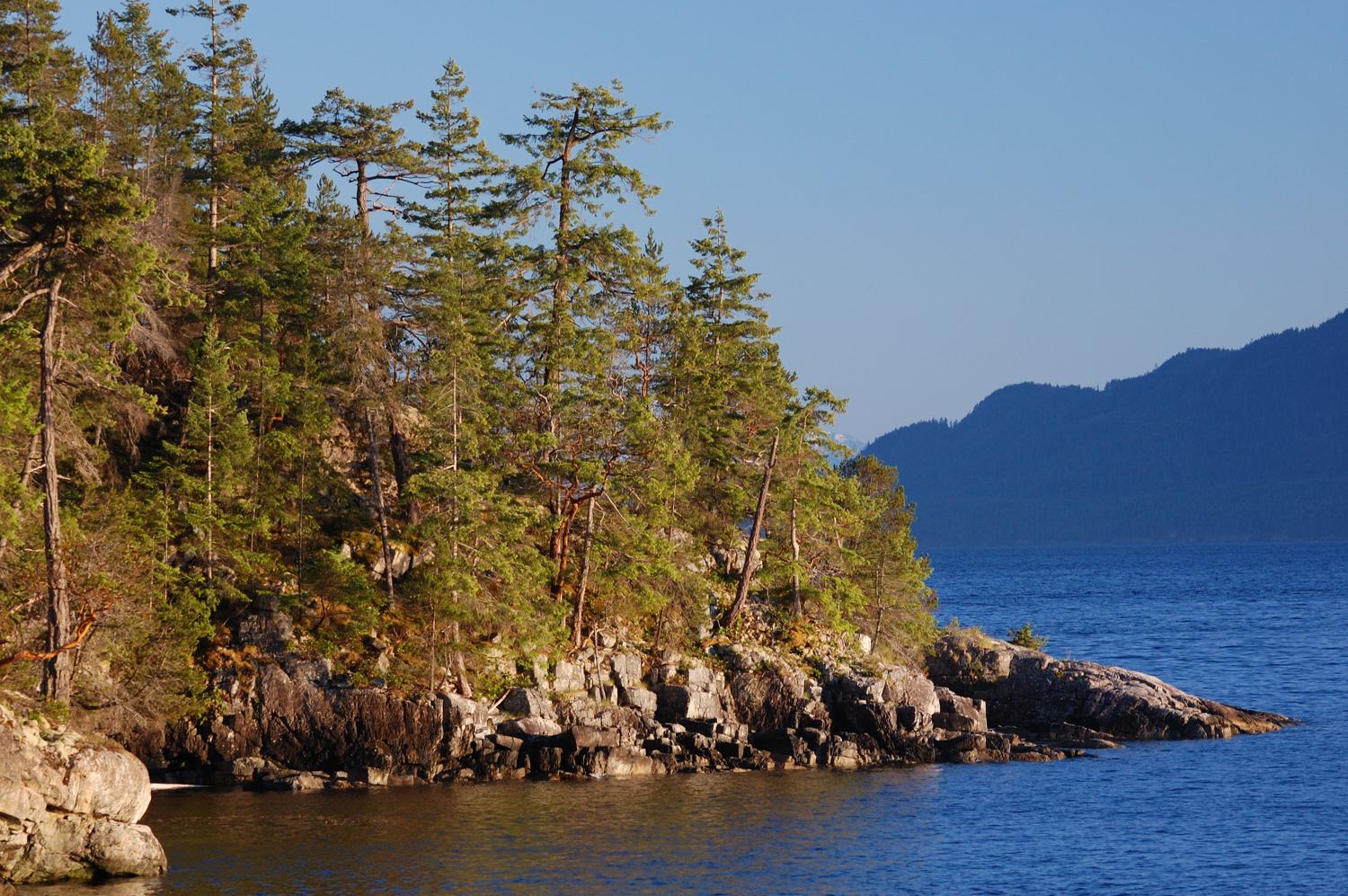
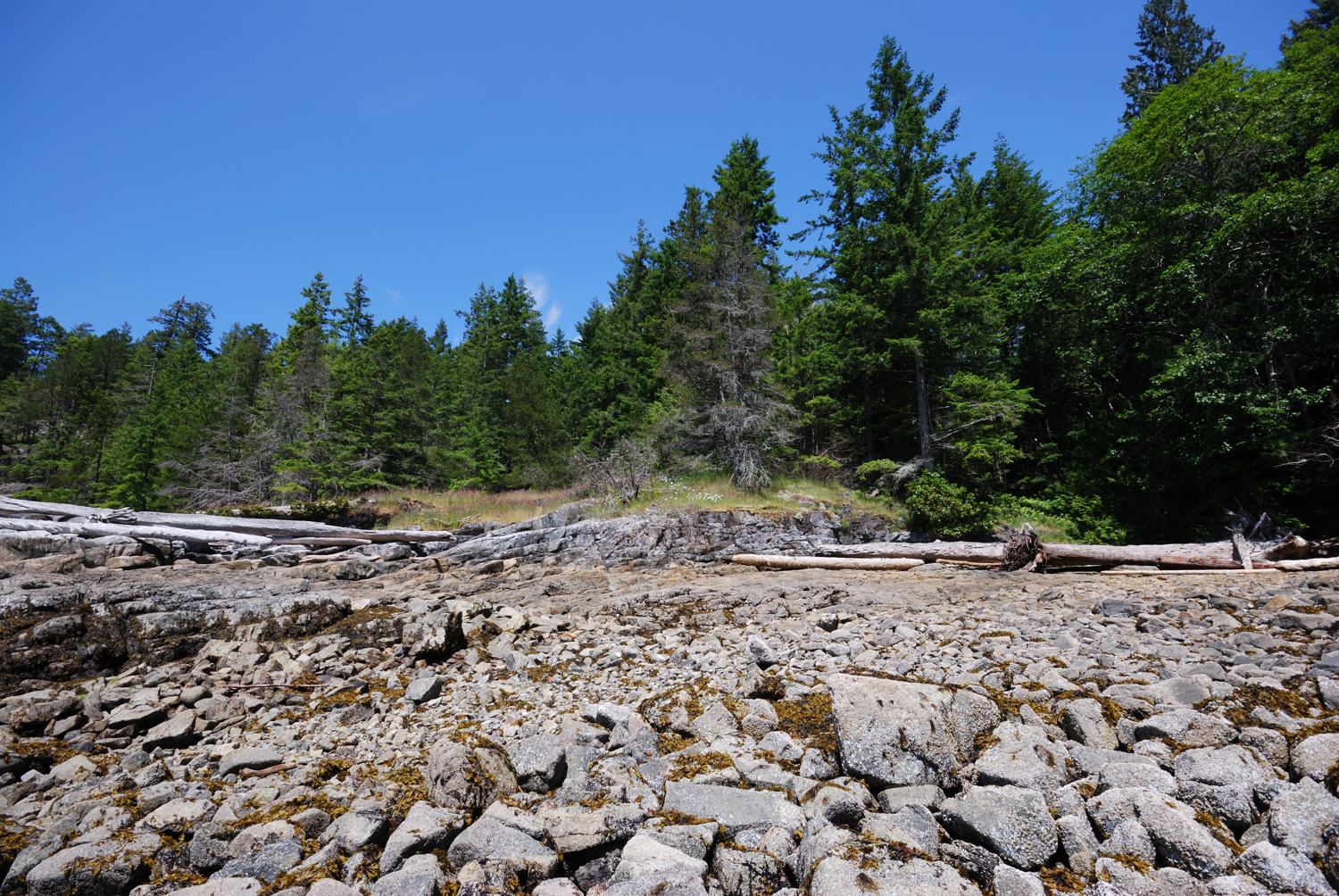
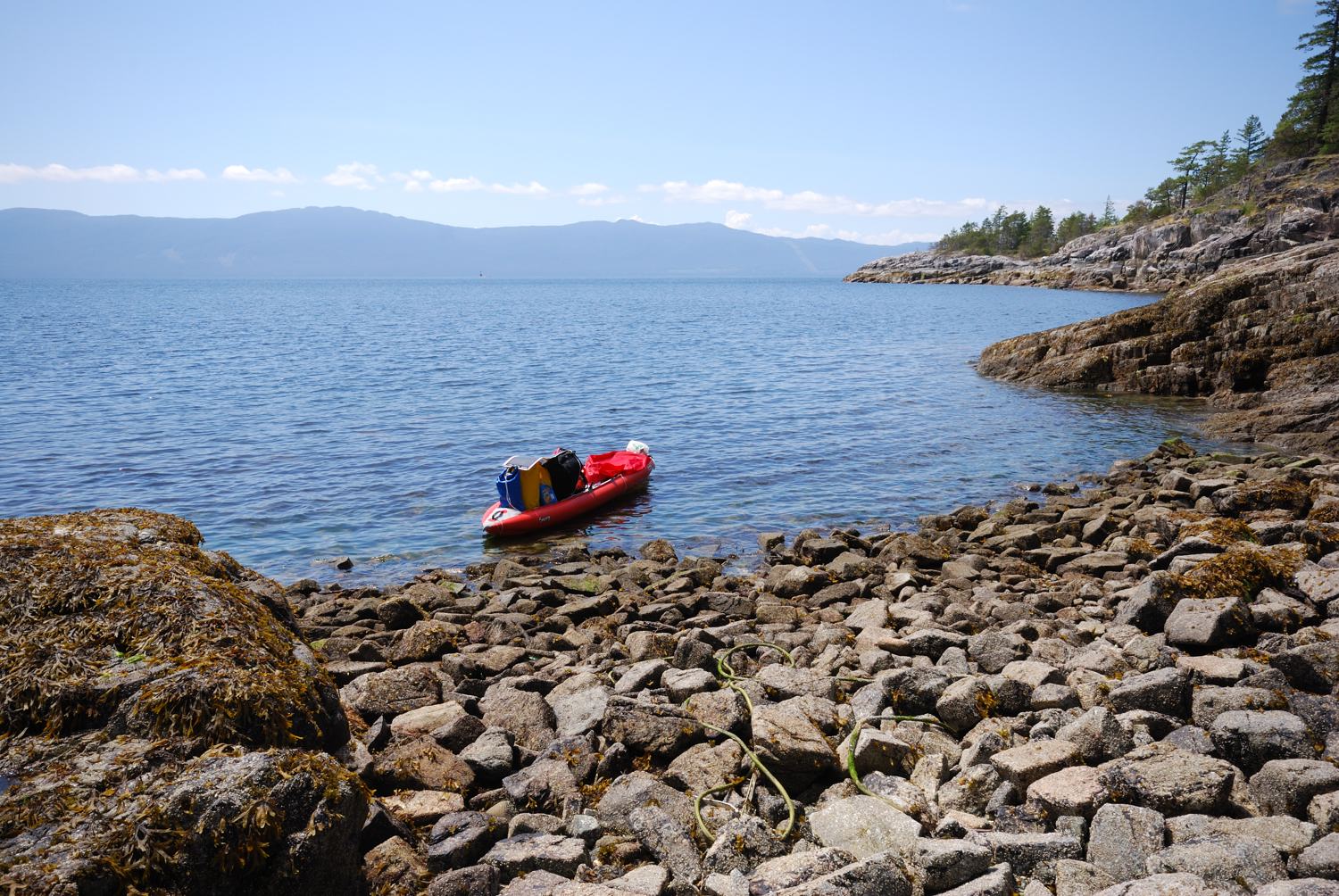
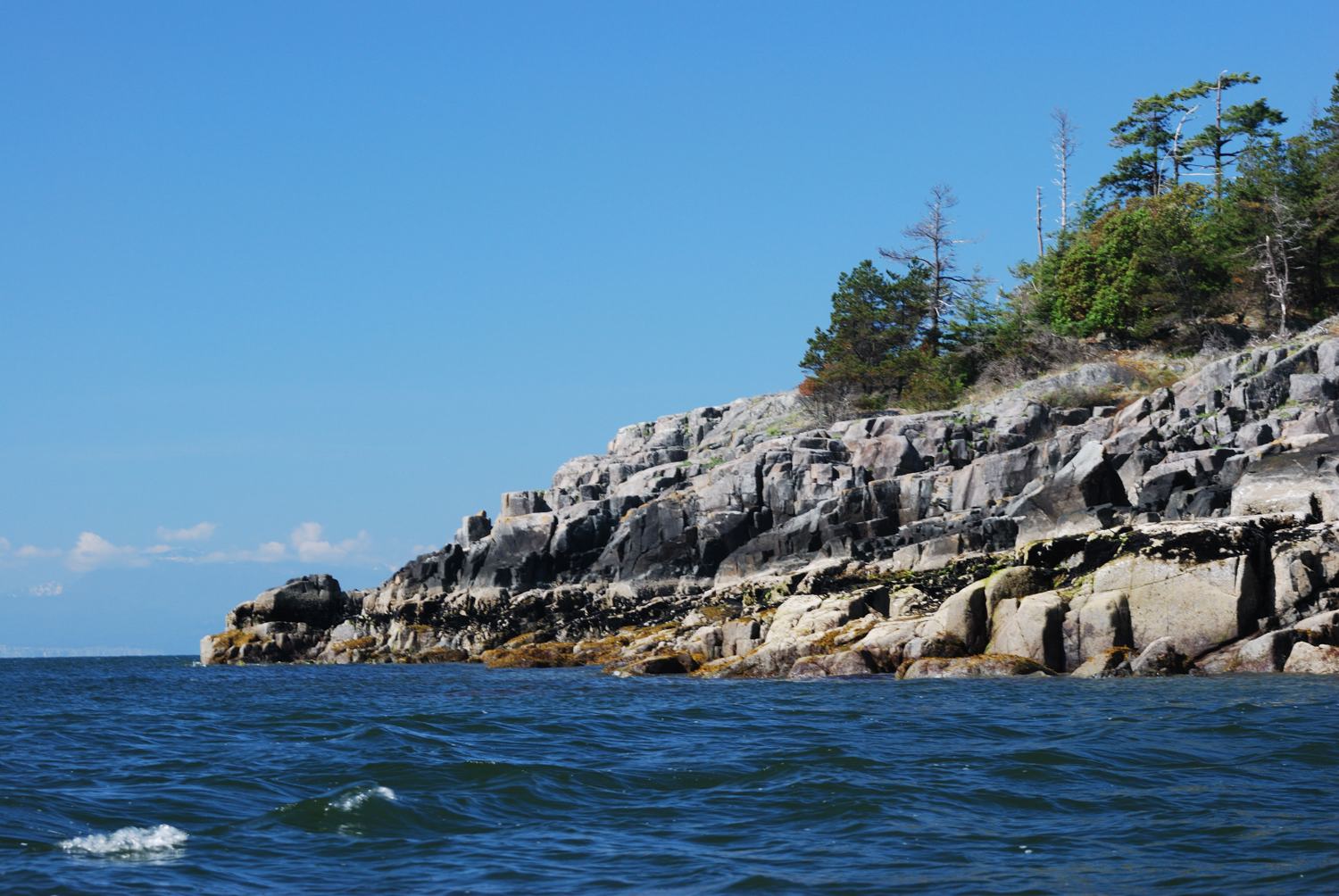
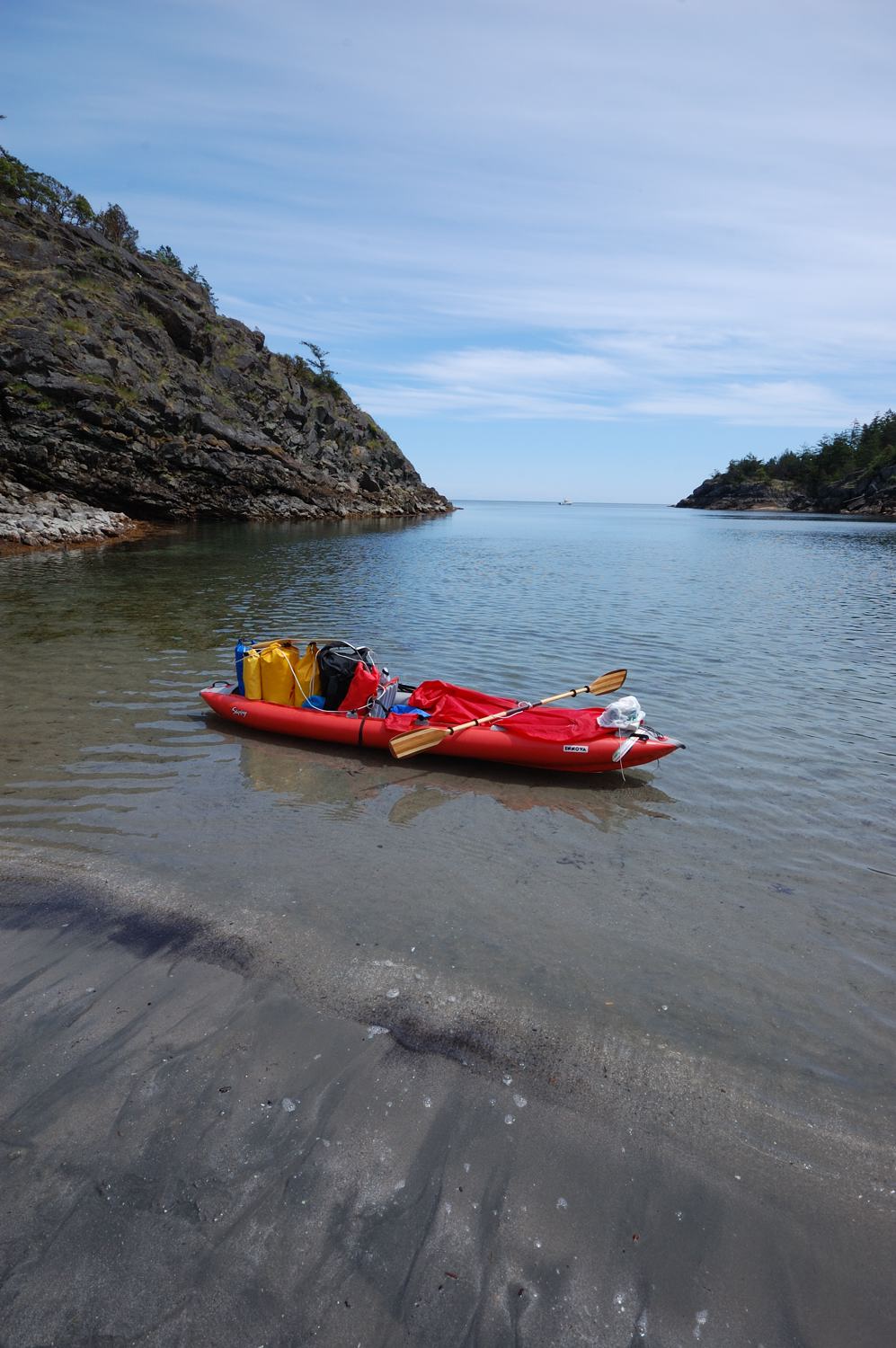
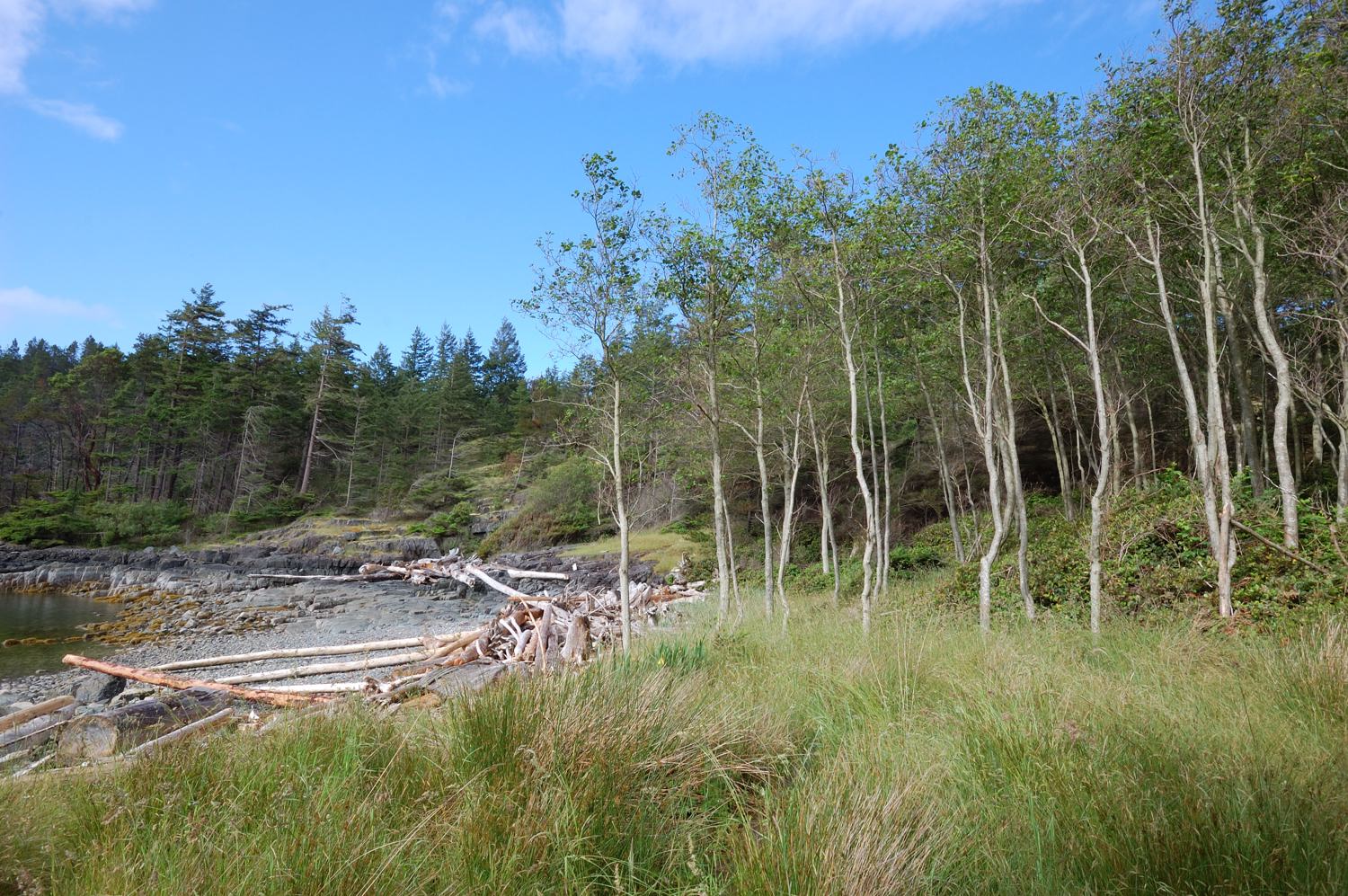
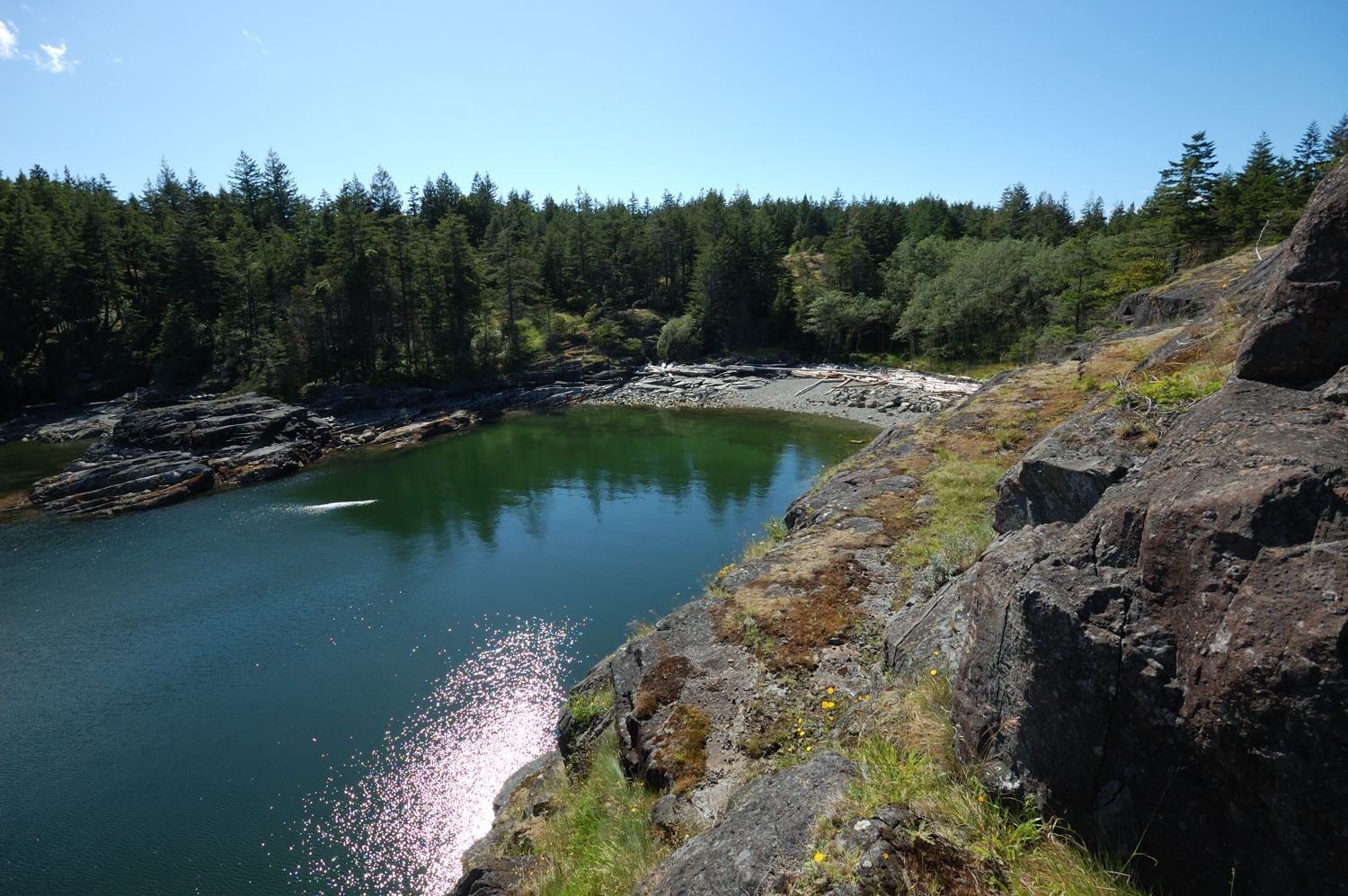
I made it to the south eastern tip of Nelson Island and was getting tired. It was mostly rocky rough bluffs so I proceeded to follow the shore until I found somewhere to camp. There were a few houses further up so I hoped all the good spots were not already taken. Luckily, I soon rounded a point and found exactly what I was looking for. A beautiful little cove with a gorgeous grassy slope above it looking out to Texada Island. Perfect, exactly what I needed! A seal watched me as I came in and a school of thousands of perch left the cove as I paddled in. I really wish I had my underwater housing set up for times like that. I set up camp since it was getting fairly late. The seal kept watching me for the rest of the evening.

Similar to the spot on Thormanby Island, this spot consisted of a moist draw supporting thick forest, surrounded by rocky headlands.


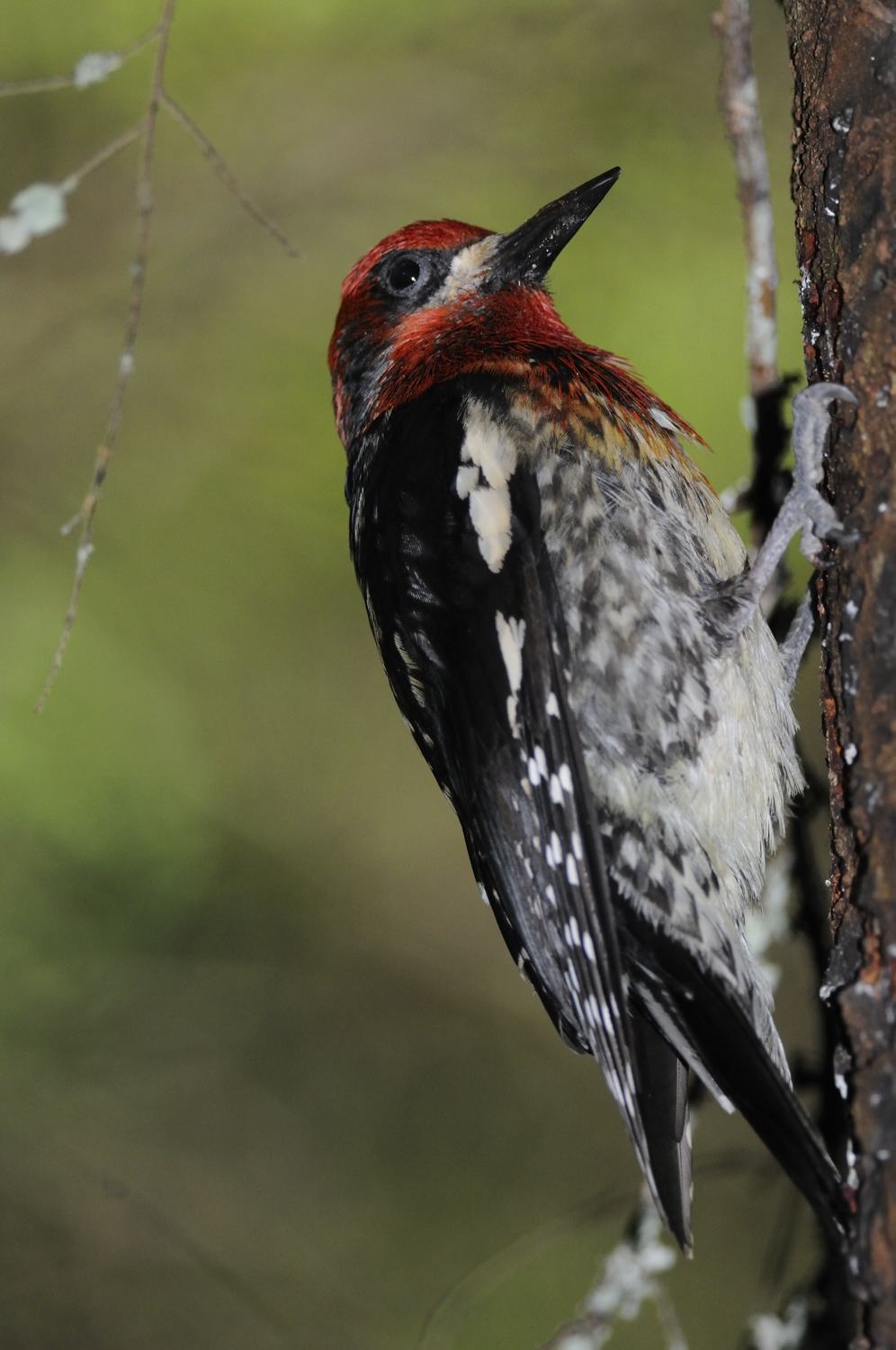
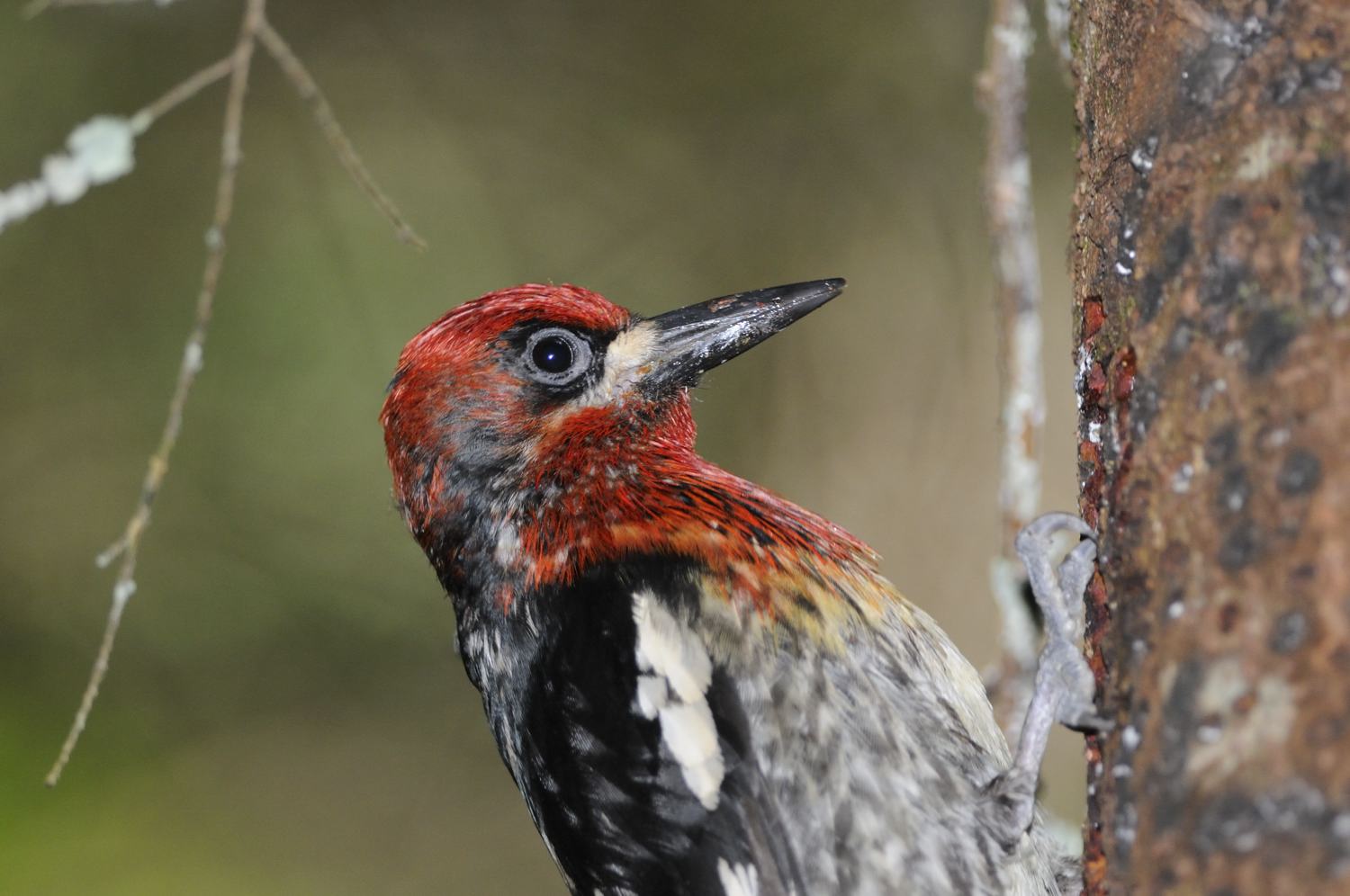
The next morning I explored this forest and was soon met by a woodpecker who swooped down to a nearby tree and made lots of noise. It was a red breasted sapsucker. I noticed that almost every tree was riddled with a pattern of holes pecked by these guys. I was happy to see the woodpecker and over the day I tried to get photos and videos. I got some good ones. They got used to me and allowed me to get very close. They seemed to like the attention. There were two birds, and I could hear a baby in a nest somewhere. It was right in the middle of the forest, way up a dead hemlock snag. The good part about this is that I could climb a nearby hill and look over to the nest hole.




This was perfect. This was wildlife and that’s why I came on my trip. I got some good shots but unfortunately I accidentally deleted the best one. Also, out on the grassy bluff, in the pine trees above my tent, was a hummingbird who came by every once in a while to pick off insects from spider webs. I got some marginal video of this, but was unable to get a still image. Hummingbirds not only eat nectar, but also insects for the protein.
There was a slight opening in the forest which was grand central station for bird life. In this spot I was trying to film two woodpeckers who were flying all around me and there were also two hummingbirds buzzing around who presumably had a nest nearby. Apparently hummingbirds associate with sapsuckers.
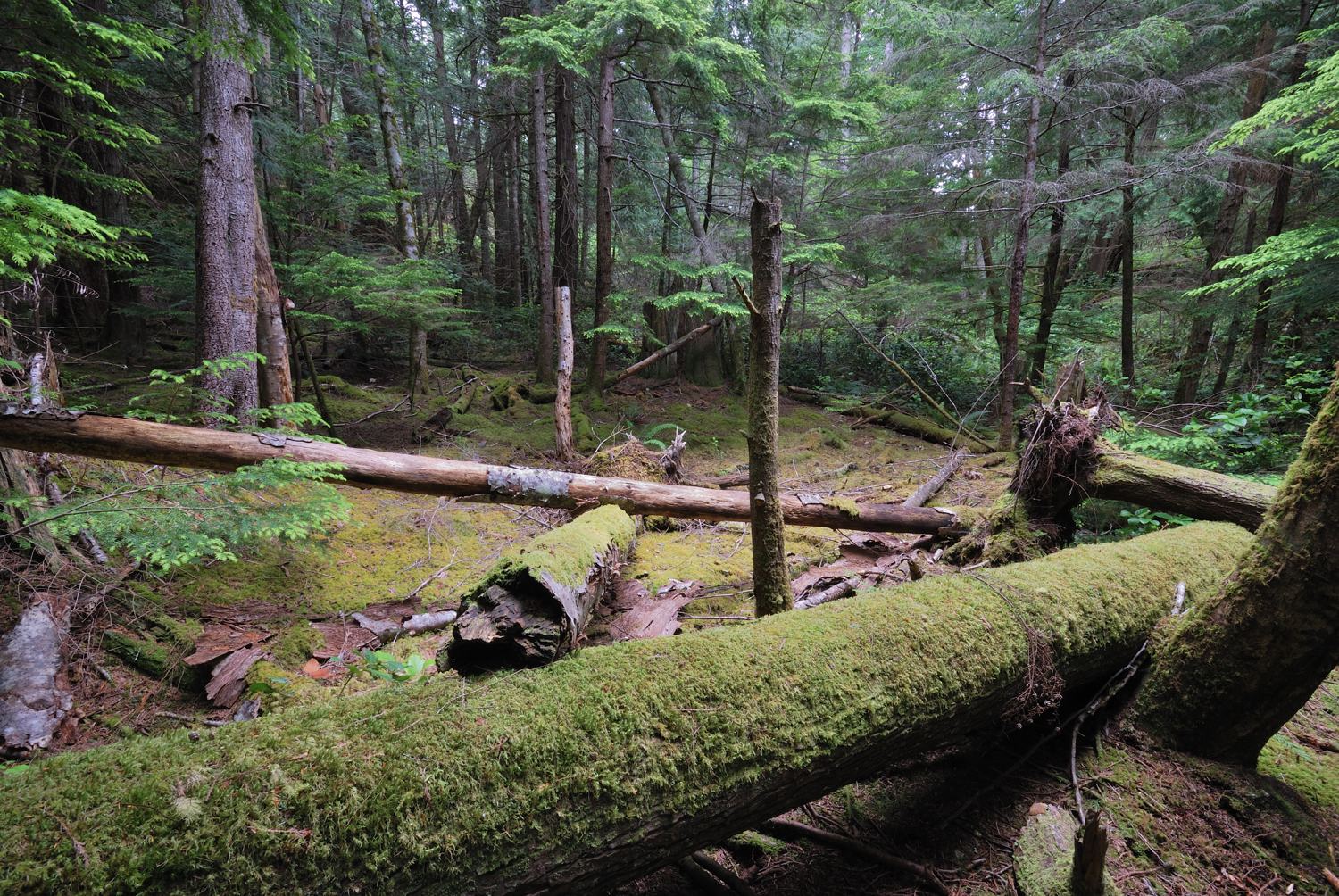
This is a good example of why it is important to protect old growth habitat because these woodpeckers like lots of standing dead trees for the biodiversity they attract. Dead trees can support more biodiversity than live ones due to all the things that feed on or take shelter in the rotting wood. Unfortunately with forestry regulations, all dead snags must be taken down when a forest is cut, even selectively, since these pose a risk to forest workers if they were to fall over. This is another reason why we need parks.


I was really happy by the end of the day. I had had a fantastic day with the woodpeckers. I discovered a spot that people rarely go to. I would leave the next morning, but not after getting more shots of the woodpeckers. On the morning of my departure shortly after I got out of my tent, three river otters swam by. These are different than sea otters since they also run around on land. They seemed to have moved up the shoreline and I couldn’t see them. I went down to the little creek to filter some water and when I was about 30 feet away I heard some noises and out came the otters from the forest. They were as startled as I was and then turned right around and went back into the forest and made lots of grunting noises.
Now, I had earlier on made a new rule to never go anywhere without my camera because it always seems that you see something when you aren’t expecting it, so I had followed my own advice and brought my video camera. I set myself up on the slope next to where the otters had come out. I could hear them splashing around in the bushes and they milled around for about ten minutes and then finally made a run for it. They looked back at me, then ran along the shore the other direction, and then jumped in the water and went out to the middle of the cove. I don’t think my presence affected them too much because they started fishing and within a couple minutes they were back on shore eating their fish. And right around this tine I heard a loud swoosh and looked to my right to see a giant pileated woodpecker on a douglas fir not far from me. This is a different species than the sapsuckers that I had become friends with earlier. It then flew out to the point and stood there for a while before flying off. And I got video of it all!
Also in this cove are the remains of a very old shipwreck. There are pieces of rusting iron bars and spikes, some of them embedded in very rotten, teredo-infested wood. I would guess this is at least 100 years old, maybe 200. I should report it and see if it is a historical shipwreck. Teredos are shellfish like clams which burrow into wood in salt water. They are a problem for the forest industry which booms wood in the ocean. You can’t keep it boomed for too long or the teredos ruin it.


















 Around the Coast Mountains