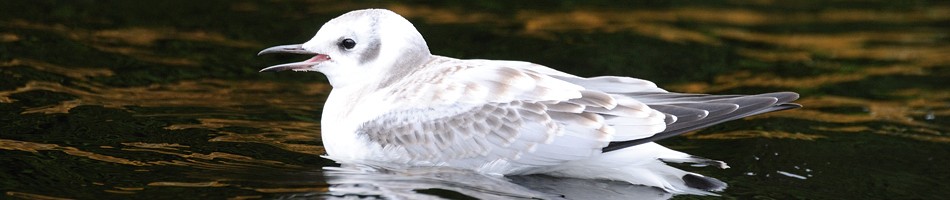
I awoke to spitting showers at 7 a.m. and rushed out to put the tarp over my tent since it leaks after several hours of rain and I didn’t know how long this would last.
I sat in my tent, bummed out listening to the steady rain and the drone from the poachers, until 11 a.m., but I stayed fairly dry inside. When it finally ended I came out for breakfast. The poachers were still at it.
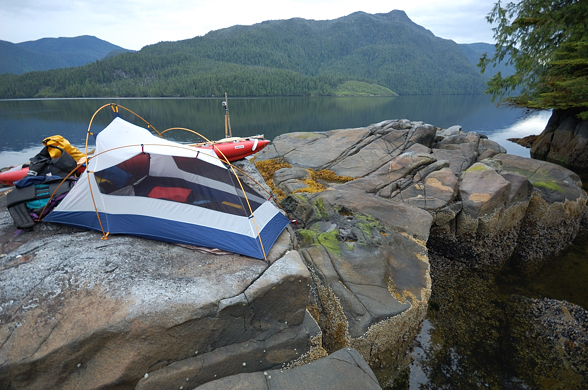
It was muggy when the rain stopped.
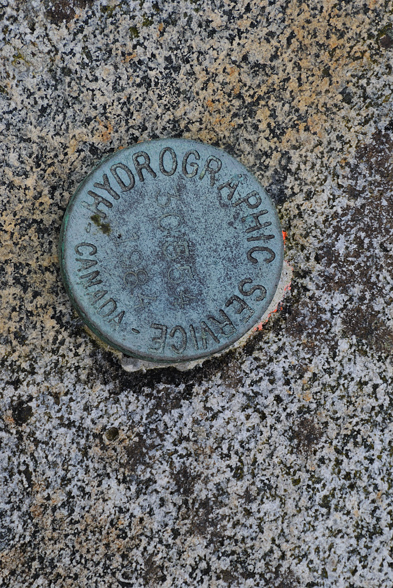
I’ve seen a few of these. Someone’s been here surveying.
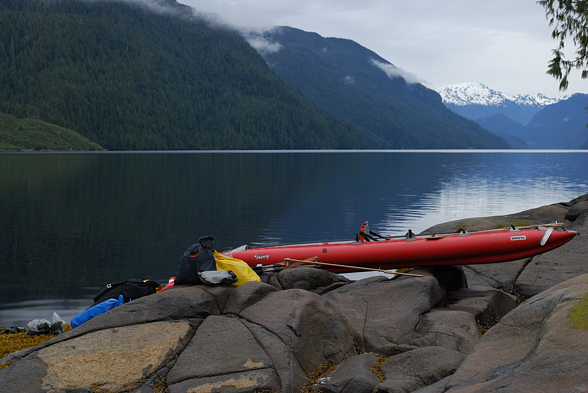
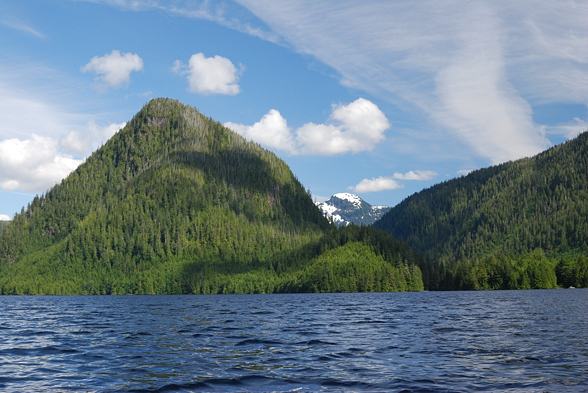
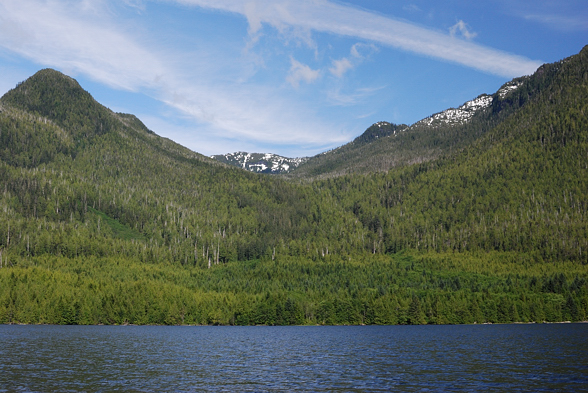
Looking up the inlet to where I would be going

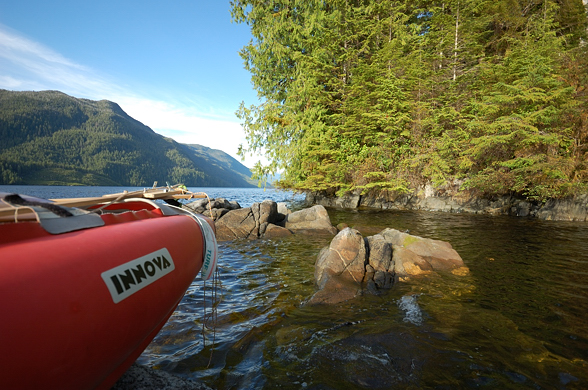
It was a difficult put-in with the low tide about 10 feet below the bare rock above. It was tricky getting everything down but as usual, the barnacles amongst the rockweed gave me traction if I was careful.


More recent petroglyphs

They last a long time, surprisingly, in this wet climate.
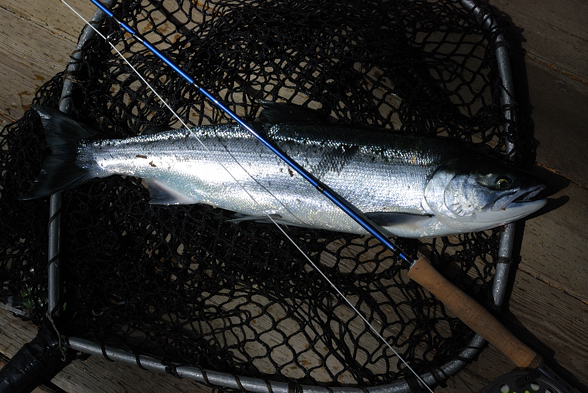
I headed east, following the southern shoreline of the inlet, past hundreds of waterfalls of varying sizes tumbling down into the water. I filled my bottles. There were lots of little salmon along the shoreline, and they especially liked the places where sizeable streams entered. I stopped at one creek and had my floating lunch in the muggy heat — a Clif bar, dates, and peanut butter.
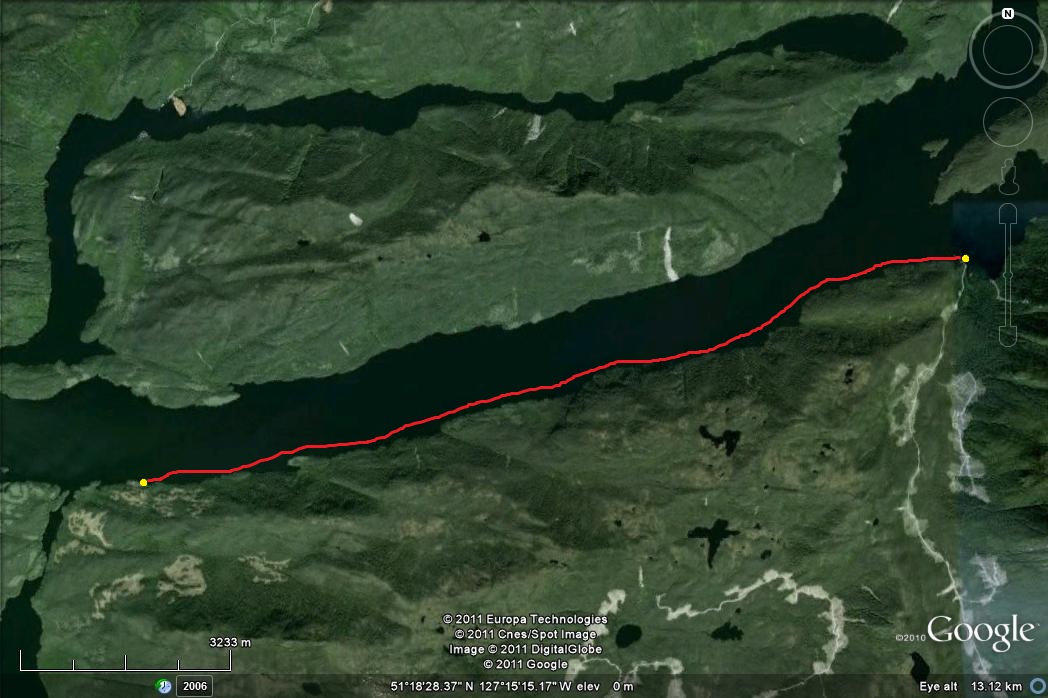
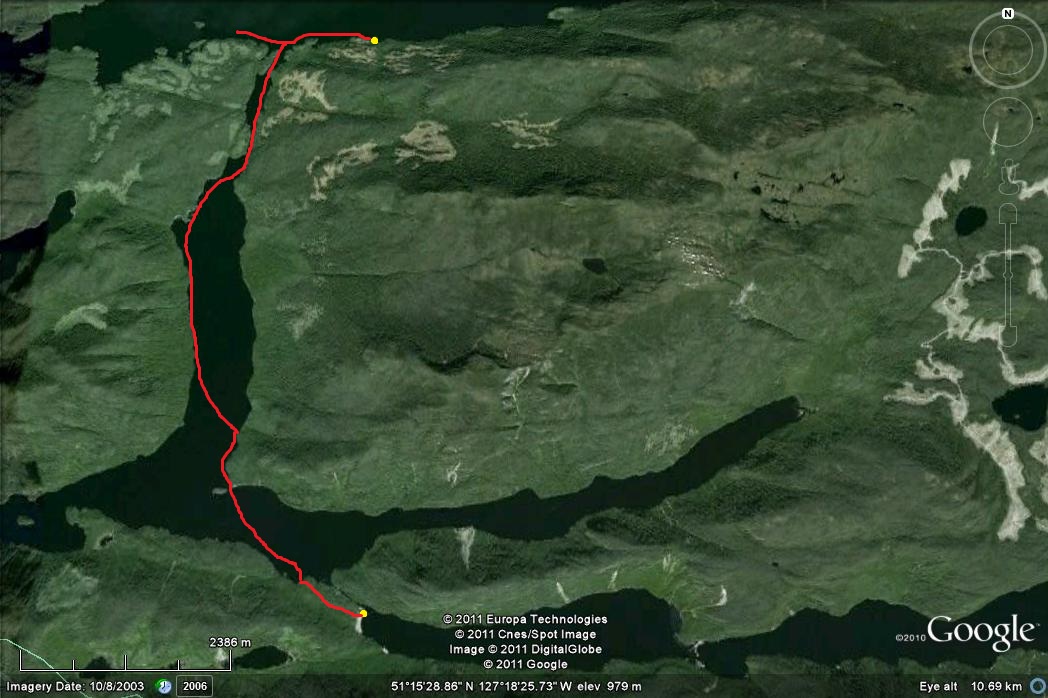
I dawdled along, as I only had 12 km to go in total to the forestry dock where I was sure there would be somewhere to camp. The water was flat and I had a slight tailwind.
A float plane went by as it flew up the inlet heading east. I figured it was going to the grizzly lodge, where I was also going. I hoped they took a photo of me, which would put my size into perspective. I’d see them tomorrow.

That’s the plane, that tiny dot just right of center, this time heading south after stopping at the grizzly lodge to the left, way up the inlet.
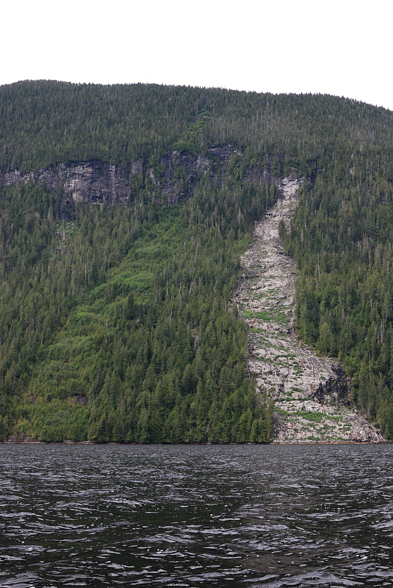
Old slide on the left, new slide on the right. I’m not sure how they start.
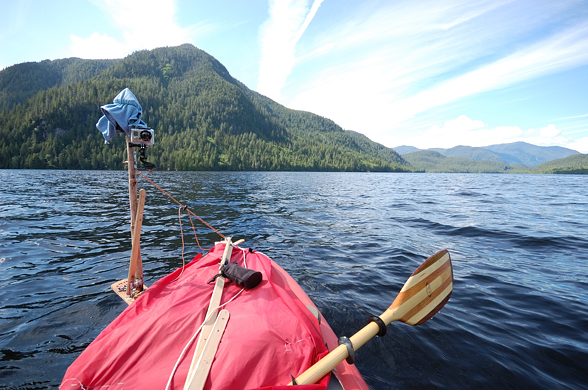
The tailwind picked up so I moved out into the channel a bit more to take advantage of it.
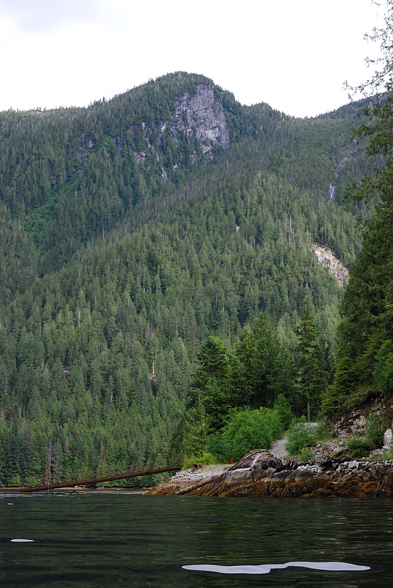
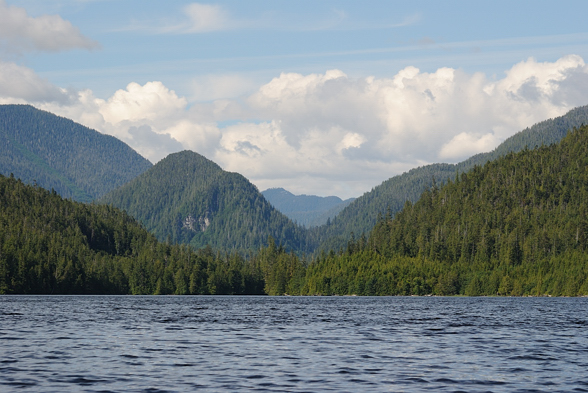
Finally the dock showed up after rounding point after point.


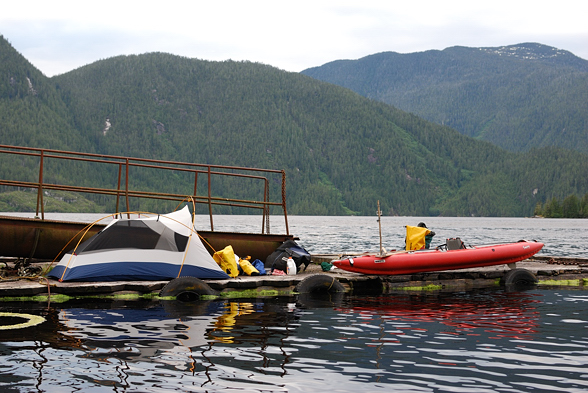
Perfect!
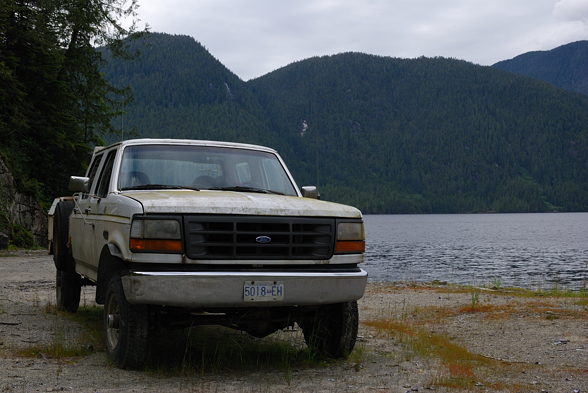
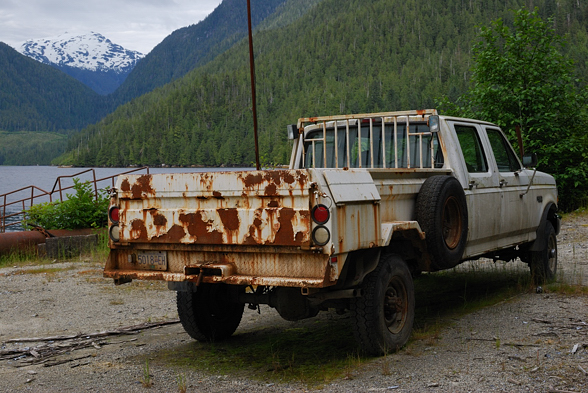
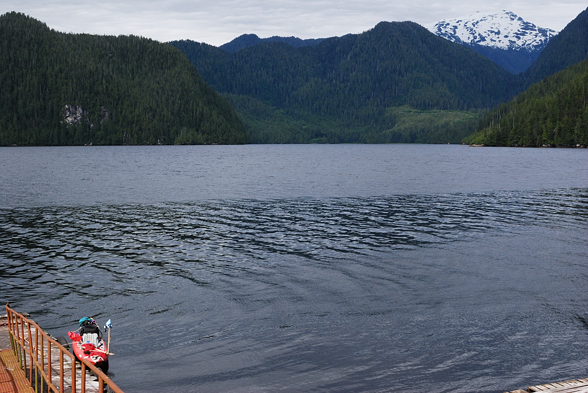
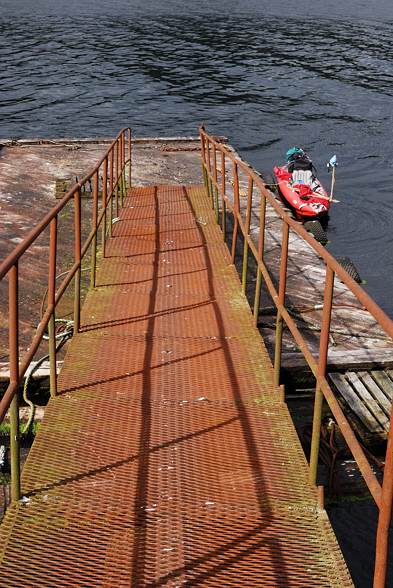
I went fishing off the dock right in front of my kayak.

This pregnant perch was just sitting there on the dock. I couldn’t figure out how it got there.
Within seconds of dropping the hook I caught a fish. I wasn’t going to keep any, I just wanted to see what was down there.

Yellowtail rockfish
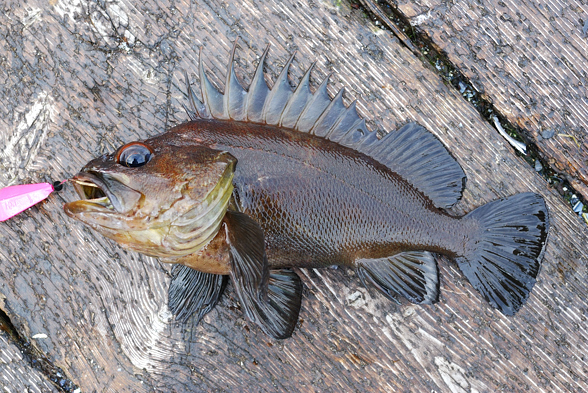
Some other kind of rockfish, not sure which type
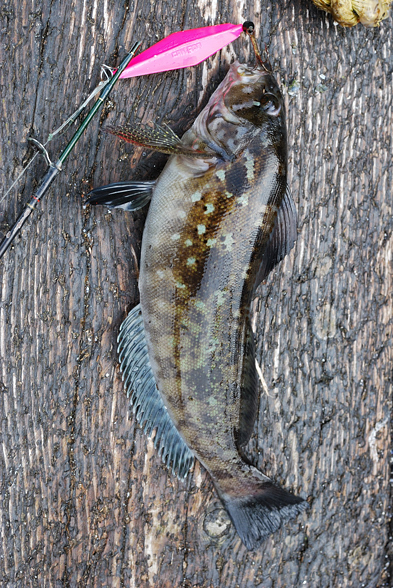
Whitespotted greenling
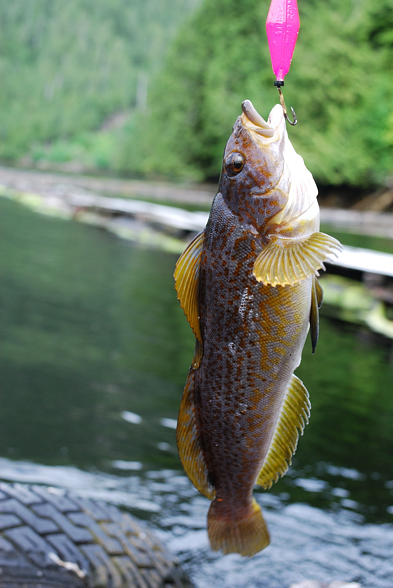
Kelp greenling. I lost my pliers trying to get the hook out out of its mouth. Oh well, they were only a few dollars and it saved me some weight!
I must have pulled up 10 fish in 15 minutes. It goes to show how prolific marine life can be, away from fishing pressures. That’s what the whole world was like not too long ago. Unfortunately no one from that era is still alive to provide perspective so we plod along generation after generation, accepting more and more degraded ecosystems as “the norm” because we know nothing different. Kind of a like the old story about being able to slowly boil a frog alive but if you throw him straight into hot water he will jump out.
One of the problems with rockfish fishing is that they come up from the deep and the drop in pressure causes their swim bladders to expand out their mouths. Then when they are thrown back they cannot swim back down because they are too buoyant. They get stuck on the surface and either die or get eaten by birds. The bycatch is very unfortunate. What we need, and some people are working on this, is a method to send the fish down to the deep on a weight, at which point their swim bladders will compress back down. Then they are released and can continue living and spawning for future generations. Unfortunately this is not used commercially. My hook went down to about 60 feet and they had no problem swimming back down from the surface. But if they come from 200 feet that is another issue.

A Sikorsky Sky Crane flew over heading south. They use these for heli-logging. They are very large and powerful choppers that can pick up entire huge cedar logs while they are still standing. The fallers go in and buck the the tree while it’s still standing. Then they almost cut it down, leaving a 1 inch line of wood in the middle of the cut to keep the stem standing. Then the chopper comes in and lifts the log off. This reduces breakage from huge logs falling to the ground.








 Around the Coast Mountains